


Importation Of New Races Of Bees. Part 3
Description
This section is from the book "History Of American Beekeeping", by Frank Chapman Pellett. Also available from Amazon: History Of American Beekeeping.
Importation Of New Races Of Bees. Part 3
In August, 1877, Hardin Haynes, of Illinois, wrote a letter to the American Bee Journal telling of his Cyprian bees which were greatly admired by all his visitors, but the source was not mentioned. It is recorded, also, that Julius Hoffman had secured some of this stock from Europe.
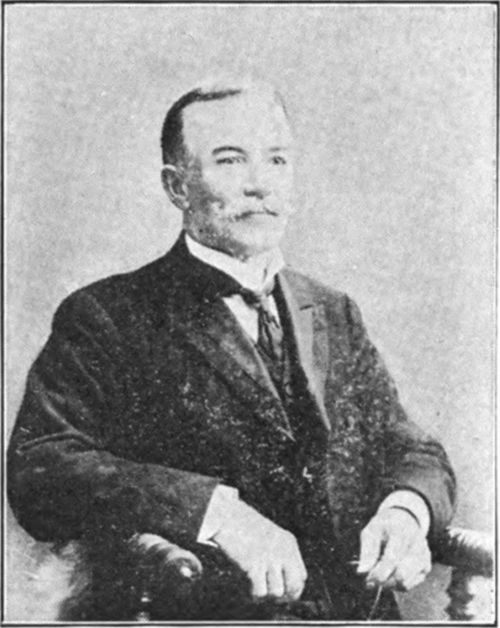
Frank Benton failed in his attempt to introduce the giant bee of India, but succeeded with several other races.
It remained, however, for D. A. Jones, of Beeton, Ontario, to bring the Cyprians to this country in such numbers as to give an opportunity to try them under a wide variety of conditions.
At the Michigan beekeepers' convention in 1879, a committee had been appointed consisting of President Cheney, Frank Benton, and H. M. Roop to look into the matter of importation of desirable foreign races. Frank Benton was a graduate of the Michigan College of Agriculture, a good linguist, and familiar with bees. When Jones was considering attempting importation on a large scale, he was attracted to Benton as a suitable partner. Together they went to Europe in the autumn of 1879, and after visiting at several points, settled at Larnica in the Island of Cyprus where they established an apiary for the purpose of breeding queens. Bees were purchased in the vicinity and Jones also went to Syria to secure bees from that country. In June of the following year, Mr. Jones returned to his home in Canada with a large number of queens, leaving Benton behind to continue his work.
At the Michigan beekeepers' convention in 1880, Jones reported concerning his trip and told of his difficulties in Cyprus. He also described the Holy Land bees which he had brought back along with the Cyprians. Both were now made available to all who wished them, and for a time much interest was manifested in the new bees. The Cyprian race proved to be too cross for comfortable manipulation, and within a few years there were few who cared to buy stock of that race.
Giant Bee Of India
At the close of the season, Benton went farther afield in search of Apis Dorsata, the Giant bee of the far east, which had been reported as something superior. They were determined to obtain the best to be had and spent large sums in the effort. Benton visited Ceylon, Java, and India in search of the big bees. In Ceylon he saw many colonies, mostly in inaccessible situations, but after great difficulty he succeeded in securing four colonies.
In a letter to Jones, Benton called them wonderful bees and described them in glowing terms. They were as large as queens, with shining blue backs and wings, and orange-colored bands on the body, having the appearance of beautiful hornets. They built combs four or five feet in length and had half a bushel of bees to the colony.
At a critical time in the enterprise, Benton came down with a fever, and the bees were neglected on the long voyage and finally lost. However, it is doubtful if this particular bee ever could be used to advantage in honey production, since its single large comb would be difficult to adapt to any kind of workable hive. Much attention was given to a discussion of this bee in the bee magazines, however, for several years, and it is doubtful whether anything attempted in the history of American apiculture aroused such great interest on the part of beekeepers generally.
Hungarian Bees
About 1879, Henry Alley imported bees from Hungary but appears not to have profited by the experience. In his book it is recorded that he found difficulty in keeping them pure and that they proved unprofitable on account of their great propensity to swarm. In later years some attention was given to the so-called Banat bees, named from the locality in Hungary from which they came. They never, however, assumed any great importance in the eyes of American beekeepers.
Carniolan Bees
Frank Benton remained abroad for a period of eleven years, during which time he studied the bees in many countries and remained in correspondence with American beekeepers. From time to time, he wrote articles for the American bee magazines and continued to stir the interest in further tests of foreign races of bees. Benton sent queens to some Americans in the fall of 1883, as evidenced by a letter from A. J. Norris, of Cedar Falls, Iowa, who, in the American Bee Journal for February,
1884, proposed to establish a Carniolan apiary from progeny of a queen received from Frank Benton "last fall. "
D. A. Jones established the Canadian Bee Journal in April,
1885, and in the first number told of having bred Carniolans on his Islands in the Georgian Bay the previous season, so he had them as early as 1884. In that magazine, Frank Benton advertised extensively for Cyprian, Syrian, Carniolan, and Italian, as well as Palestinian queens, all reared in their native lands. At the time his address was Munich, Germany. Benton's articles in the Canadian Bee Journal and in the American bee periodicals appear to have been the source of much of the interest in the Carniolans, and he very probably furnished most of the queens which came to this country at that time. In his advertising he stated that he had several times visited Carniola and inspected many apiaries, and had kept the Carniolan bees side by side with the Italians and found them the gentlest race of bees known.
Tunisian Or Punic Bees
While in the East, Benton made at least one trip to the coast of Africa and investigated the Tunisian bees, afterwards known as Punics. He probably offered queens of this stock direct from Africa at the time, but little attention seems to have been paid to them.
In 1891 John Hewitt, of Sheffield, England, sent two queens of this race to T. G. Newman, editor of the American Bee Journal. Doctor Miller also received two such queens from the same source. Both of the Newman queens and one of Miller's were lost, but Miller safely introduced one. E. L. Pratt, a well-known beekeeper of that day, was writing much in their praise, and Henry Alley, of Wenham, Massachusetts, was also advertising them as "the most wonderful race of bees on earth. " In his magazine, American Apiculturist, for August, 1891, Alley stated: "The imported stock in my yard was very expensive and required courage for the investment. I probably paid a larger price for my Punic bees than any man ever before paid for queens of any race. Imported Punic queens are now offered at eighty dollars each, and the price may go even higher. "
In the same issue of that magazine, E. L. Pratt offered Punic queens for one dollar each.
Interest in the Punics was short lived. Although Pratt wrote for several magazines articles in which he lauded them highly, numerous criticisms began to appear. In July, 1892, Gleanings published an article in which was included an extended account of the Tunisians written by Benton, who had seen them in their native land. He described them as small, very black and spiteful stingers, as well as bad propolizers. They had so little to recommend them that there was no occasion to continue to push them after the novelty of a new introduction had worn off.
Caucasians
It was only after Benton had been placed in charge of bee culture in the United States Department of Agriculture and made his second trip abroad, that Caucasian bees became well known in this country. In 1905, he visited the Caucasus and sent queens to America. Among them some were sent to Herman Rauchfuss, of Englewood, Colorado, who continued to rear queens from the descendants of the original importation until this writing. It appears that Rauchfuss had already imported some queens of this race from Germany.
Continue to:


My Books

