


Sweet Clover And Specialization. Part 2
Description
This section is from the book "History Of American Beekeeping", by Frank Chapman Pellett. Also available from Amazon: History Of American Beekeeping.
Sweet Clover And Specialization. Part 2
Public sentiment changes very slowly in cases of this kind.
For many years it was hard to see any progress in overcoming the objections to sweet clover. It remained for men who were both beekeepers and farmers to demonstrate that the plant could be made to serve a useful place in a farm rotation.
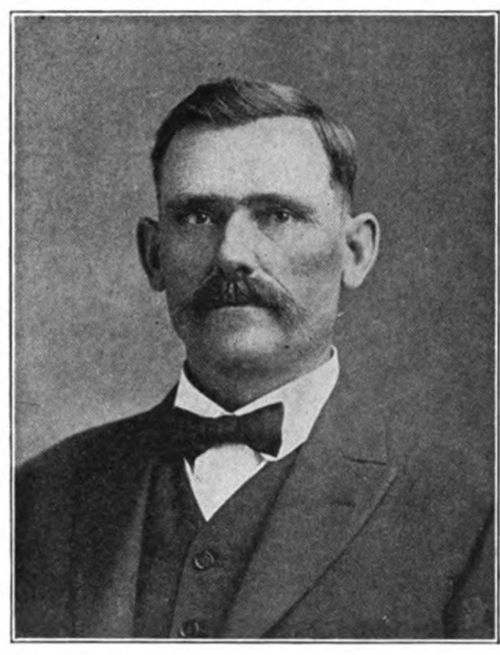
Frank Coverdale, successful Iowa farmer and cattle feeder whose large scale use of sweet clover did much to break down the prejudice against the plant.
After the turn of the new century, an occasional voice was raised in the farm papers in favor of the use of sweet clover for forage. Among those who were able to claim attention was Frank Coverdale, of Delmar, Iowa. An extensive farmer, Cov-erdale planted the crop on a sufficient scale to demonstrate its real value. When he first began its planting, some of his neighbors consulted the county attorney to see whether he could not be prosecuted for sowing the seeds of a noxious weed. Later, when he began pasturing his cattle on sweet clover and was able to ship fat cattle to market in competition with corn-fed animals, his opinions began to be treated with respect.
Coverdale's experiments were so novel that much publicity attended his efforts, and here and there someone else found courage to try a small plot.
Where given an opportunity, sweet clover always made good and thus the movement spread.
Another pioneer with sweet clover was E. E. Barton, of Pendleton County, Kentucky. Tobacco growing had been followed in that region until the humus was so low in the soil that crops no longer could be profitably grown. Many farms were abandoned and some sold for taxes, because they could not be made to pay. Barton came into possession of land through foreclosure of mortgages. In a year of drought he noticed that sweet clover grew luxuriantly along the roadside and that the cows browsed it freely. Barton began growing sweet clover, as did some of his neighbors, and it was not long until they were able to rejuvenate their farms through its aid. The story was told far and wide, and soon these men found themselves making money through the sale of seed. Thus a few isolated successes turned the scale and started sweet clover on its way to general acceptance.
The thing, however, which definitely established the movement to sow sweet clover as a farm crop was the need of a legume for the plains region, where neither red clover nor alsike clover could be depended upon. For many years after the virgin sod was turned in the Red River Valley of the North and the adjacent region, wheat yields were heavy and the big farms returned large profits to their owners. When the yields declined to the point where rotation became necessary, sweet clover was the best legume which could be found which was adapted to the region. Thus necessity, rather than conviction, brought the plant fully into its proper place in the agriculture of a nation.
The census for 1910 showed only 495 hives of bees in the entire state of North Dakota, and by 1920 the number had increased only to 708. It was during this period that sweet clover was slowly coming into use on the farms, and, of course, the few bees present quickly showed the effect of the new pasture.
About 1920, when boom prices following the World War were in effect, F. C. Bennett, of Jamestown, North Dakota, procured 360 pounds of comb honey from a single colony of bees and sold it for fifty cents per section. One hundred fifty dollars cash from one hive of bees was too good a story to keep and he wrote about it to A. I. Root. Root, of course, printed the story in Gleanings, and thus was the big boom in honey production in the Red River Valley given its first impetus. Soon after, R. L. Webster became State Entomologist and he began stirring up interest wherever he could. Webster invited the writer of this book to visit him and see the region. As a result a story appeared in Country Gentleman in 1923 entitled "An Acre of Wheat or a Hive of Bees, " and a similar story was published in the American Bee Journal.
In the meantime, L. T. Floyd had been appointed provincial apiarist of Manitoba. Floyd was aggressive and made the most of every similar opportunity, so, of course, Floyd was visited on the same trip. As a result of Floyd's work, beekeeping developed very rapidly in the prairie provinces of western Canada and soon took on proportions of an important industry, where previously there had been few bees. W. J. Boughen (about
1912), of Valley River, was the first in Manitoba to sow sweet clover as a crop.
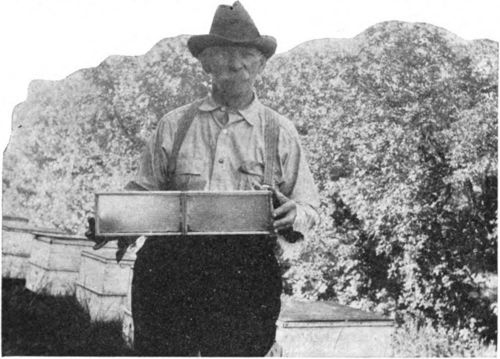
F. C. Bennett, who sold $150 worth of comb honey from one hive, started a boom for beekeeping in North Dakota.
In the Country Gentleman article already mentioned, the writer stated that "In my opinion the greatest beekeeping country in America, if not in the world, will one day be found in the region from Sioux City, Iowa, northward through the Dakotas and far into the Canadian provinces. A rich soil, hot days, and cool nights are a combination that insures the greatest honeyflows from sweet clover. " Little was it realized how quickly that prophecy would be fulfilled. Big yields of honey where it is possible to keep large numbers of bees in one location offer unusual opportunities for the beekeeper. Yields far in excess of anything with which eastern beemen were familiar became the usual thing. The man with a hundred hives wanted a thousand, and specialization became the order of the day. These great fields of sweet clover, which rapidly spread throughout the Northwest, offered just the right combination of conditions to encourage a man to devote all his attention to bees. Instead of being a mere sideline, as it had been so long in most localities, honey production became an exclusive business. Men no longer talked about crops in terms of hundreds of pounds, but in tons and carloads. The carlot producer, instead of being unusual, became the accepted and expected representative of the industry.
Continue to:


My Books

