


Cat Buying And Selling. Continued
Description
This section is from the book "The Book Of The Cat", by Frances Simpson. Also available from Amazon: The Book Of The Cat.
Cat Buying And Selling. Continued
Here let me quote from an article in that excellent American paper, The Cat Journal, headed "Unreasonable Buyers." The writer says:- "One of the most difficult things with which the cat seller has to contend is the unreasonable buyer. There are buyers who, finding a cat to suit them, pay the price and are satisfied. There is, however, another class that it is best to let alone. They are never satisfied, and blame the seller for everything that happens either on the road or after the kitten is received, and many of them also think if they are sharp they will be able to buy a $100 kitten for $10 or S15, and when they get such a kitten and they discover that it is not worth $100, they are disgusted, and have a lot to say about unfair dealing, etc. If a kitten that has been a pet is taken from its surroundings, and sent on a long journey, the rattle and the unusual conditions of such a trip places her in a state of nervous terror, so that she very rarely shows off to good advantage in her new home. The purchaser, if a true cat lover, will appreciate all the trouble of poor little pussy, and give her the tender-est treatment and coax her to make the best of her new surroundings.
It is a very rare thing for a kitten to come from the box after a long journey looking just as the new owner expected. Tired, homesick, and frightened, she will not eat, and is altogether a pitiable looking object. It is always advisable to put a new arrival in a room by herself, with a comfortable bed and conveniences, entirely away from the rest of the cats and kittens, and allow her to become acquainted with the members of the family gradually. Do not allow other cats to come bothering around till the new member of the family is entirely acquainted with its surroundings. Especially be very cautious in introducing two male cats.
"Sellers must be very cautious in sending out their stock, and buyers must not expect too much. Give the new member of the family a little time to know things before you write your letter of complaint. Be sure you are not expecting too much for the price you paid."
The question has often been asked, "Can cats be made to pay?" and, naturally, novices in the fancy wish to know the best way in which to make a good start.
Here I would say how much may be done by well-known and influential members of any fancy if they will give themselves a little trouble in helping the novice, who, after all, is the backbone, so to speak, of every fancy, and hence it is very essential that beginners should start on the right lines and with reliable, and therefore profitable, stock. Speaking from experience in the cat fancy, I can say that several persons have come into the ranks and gone out of it again, in many cases through sheer disgust because of the deceptions practised, and of which they, as novices, have been made the victims. I hold that if beginners are to be retained as members of a fancy, they should be treated kindly and liberally by the experienced fancier, especially when it is a question of purchasing stock. It is much to be lamented that novices are frequently treated in a reverse manner, and fanciers (so-called) seize upon an opportunity of getting rid of superfluous and often inferior specimens to those who are unable to discover good from bad in the cats offered to them.
At the same time, it is a pleasing fact that there are many true fanciers in the feline world who, having made their names as breeders, prize-winners, and perhaps judges, put themselves out to give valuable advice, and often spare no pains in endeavouring to obtain good stock for the novice at reasonable prices.
Another question often asked is, "Does showing pay?" In answer to this query, I give an extract from the pen of the clever weekly correspondent of Fur and Feather, "Zaida," who says: - "To those who keep their cats for pleasure, who really love them and can afford to despise the small 'takings' available, keep your cats at home and do not show. Expense does not count with this class of exhibitor, but risk to the welfare of their best-beloved pussies undoubtedly does. To those who are trying to make money by their cats, we would urge: harden your hearts, learn how to show, where to show, and when to show; and recognise the expense, risk, and trouble involved as part of the unavoidable outlay which is to bring in a certain return. Undoubtedly, a show is a heavy expense, and will always leave you out of pocket. Even if you conduct it on the most selfish terms - the 'give-nothing' and 'take-all-you-can' system - you will be exceptionally lucky if you clear your expenses. You cannot expect to sell your kittens well if you do not exhibit.
"If you possess a stud cat, he must be seen and known before you can hope to have a demand for his services. Your own eye must be continually trained by comparison of your own stock with the prize specimens of others. In short, if you wish to make money, you must spend money. On the other hand, never exhibit except at first-rate shows, and never be tempted to show an animal out of condition. If you can afford to buy animals already well known in the show world, cats of renown, for whose offspring there will always be a keen demand, you may possibly abstain from exhibition. This plan, however, involves a very large initial outlay. Then, again, the happy people who have won their laurels, whose names are always associated with first-rate animals of a particular breed, they, indeed, can afford to rest in peace, and show no more. Other people will buy their kittens, and do their exhibiting for them, and also do that mournful nursing and burying that too often follows a show. Undoubtedly, it is fascinating to show successfully; but, on the whole, we think the most enjoyable shows are those where one goes to look at other people's exhibits and leave one's own at home." A few words as to the stud fees and arrangements for visiting queens will not here be out of place.
The usual fee for the services of a stud cat is fixed at £1 1s., but some fanciers are willing to accept less, especially if their cat is not a well-known prize-winner. A higher charge is often made if the railway journey has to be followed by a cab fare, or if the owner, having a valuable stud cat, does not wish to encourage many visitors. The carriage of the queen should always be defrayed by the sender, and if a telegram and return insurance is desired, then these sums expended should be refunded to the owner of the stud cat. It is desirable to announce the despatch or intended despatch of a queen, as it may not be convenient to receive her. The usual time to keep a visitor is from three to six days, and then the owner of the stud cat should give notice of the return. In case the first visit proves unsuccessful a second visit is usually allowed by courtesy without any extra payment, but this must not be taken as a matter of course, and it is best for the owner of the queen to ask permission to send again. If through a mistake in the time of sending a cat apparently fails to mate during two visits, it can only be by the kindness of the stud cat's owner that a third visit is permitted for the one fee.
If, however, the queen has been known to have mated on each occasion, a third visit gratis cannot be expected even if there is no result. A fee once paid for a visit is not returnable. It is sometimes a matter of arrangement between fanciers to have the choice of a kitten instead of the mating fee, but this transaction does not commend itself unless the parties are on very friendly terms. A clear understanding should be arrived at on all occasions between the sender and the receiver, and thus any after unpleasantness may be avoided. It is catty etiquette to forward the fee when sending the queen or, at latest, immediately on her return. A label for the return journey should be fixed inside the lid of the hamper. This is a saving of trouble to the owner of the stud, and is also a means of identification.
In selecting a young kitten for purchase out of a litter, take note of the size of head and width between the ears. In self-coloured kits look out for white spots, and avoid those with long tails. Fanciers should strive to resist the temptation of buying too many cats and kittens of different breeds. To the novice and the beginner I would say, Buy two or three good specimens, carefully selected; these will be worth quantities of doubtful ones, which, as a matter of fact, have, as a rule, no value at all. Seize every opportunity which comes across your path of seeing and examining well-bred, prize-winning cats, and attending shows. The cleverest fancier and most successful breeder can improve himself by observation and education.
Do not be offended if you are told by those who have had a larger and longer experience in the fancy, and who are really experts, that you have made a mistake in any purchase. If you resent their criticisms, you may, and probably will, accumulate much rubbish as a monument of your own conceit. A great deal may be learnt from books, but more from observation. Above all, do not, when you have acquired some knowledge, form too high an estimate of your own powers and of your own cats; a true fancier is always ready - nay, anxious - to learn, well recognising that ignorance alone claims to be omniscient.
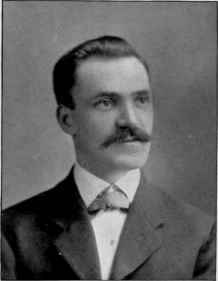
Mr. F. W. Western, The Secretary Of The Sany Club Show (Photo: Kingham, Bedford. )
Continue to:


My Books

