


Trichina (Trichina Spiralis) In Cats
Description
This section is from the book "The Cat", by Rush Shippen Huidekoper. Also available from Amazon: The Cat - A Guide To The Classification And Varieties Of Cats And A Short Treatise Upon Their Cares, Diseases, And Treatment.
Trichina (Trichina Spiralis) In Cats
Trichina is not a rare parasite in the cat, but its diagnosis is excessively difficult. The Trichina spiralis, in its vesicular form, is found in the rat and in the hog, the flesh of both of which animals, of course, is common food for the cat. When eaten, the parasite wakens into life, develops into the little worm which is seen in the figure (Figure 28), and mixes with the contents of the stomach and intestines. Fortunately these frequently develop irritation, which produces a diarrhoea in the animal, and the majority of them are carried off. But in other cases some of the worms pierce the intestines and travel into the muscles of the body.
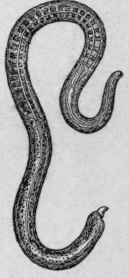
Male.
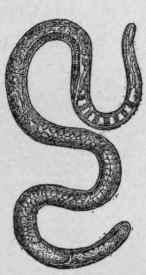
Female.
Fig. 28. - Trichina Spiralis.
If they exist in small numbers, appreciable symptoms are not visible. If, however, they invade the muscles in large quantities, they produce pains which resemble greatly those of rheumatism, and they may produce a fever lasting for a few days. The invasion, if excessive, may produce death. In other cases the worm becomes encysted in the cat's muscles (Figure 29), and produces no after-effect. The diagnosis can only be made by a recognition of the parasite. In the human being suspected cases of trichina-poisoning have been verified by harpooning small bits of muscles from the sore arm or leg of the patient, and demonstrating the presence of the parasite by the microscope.

Fig. 29. - Trichinae Encysted in Muscular Tissue.
Cause of Parasitic Broncho-pneumonia. (Vide page 92.) free.

Fig. 30. - Strongylus Pulmonis. a, b, Eggs segmenting; c, Egg with embryo; d, Embryo
Continue to:


My Books

