


The Collies. Part 2
Description
This section is from the book "British Dogs, Their Points, Selection, And Show Preparation", by W. D. Drury. Also available from Amazon: British Dogs: Their Points, Selection And Show Preparation.
The Collies. Part 2
As will be gathered from this, there are two varieties of Collie as generally accepted - the Rough and the Smooth; but there is also a third, the Bearded Collie (Fig. 41), which is often found in the sheep-markets of Perth, Stirling, and Falkirk. This is a purely working type of dog, and appears to be a combination of the Collie proper and the Old English Sheepdog. Unlike the latter, however, it is not bob-tailed. Classes for this distinctive-looking dog are provided at some shows, and meet with a fair amount of success.
Less than forty years ago ₤10 would have been considered a very fair price for a Collie, and when Mr. G. R. Krehl gave ₤100 for the puppy Eclipse, something like a sensation was caused. With this may be said to have commenced the era of big prices for Collies. Since that time, however, the sums that have been paid by breeders for first-class specimens have run well over the four figures. Amongst the highest prices paid for these dogs stand those in the name of Mr. A. H. Megson, of Manchester. He started with the black-and-tan Rutland (K.C.S.B. 13,948), which was bred by the Rev. Hans Hamilton, and which had a more or less chequered career and several owners before its true merits were recognised by the astute Mr. Boddington, who picked it out of a West Country show and bought it for the modest "fiver." Soon the dog made a name for his new owner, and eventually became Mr. Megson's property at ₤250.
Yet another big purchase by the same gentleman was Champion Metchley Wonder, for which no less a sum than ₤500 was paid. This was followed by .£350 for Champion Caractacus - a price, too, that was paid under the hammer at the Liverpool fixture of 1888. At the time of his purchase Caractacus was a nine months' old puppy, and was entered in the catalogue as for sale at ₤100. So promising a youngster, even if not so attractive-looking as some, did not escape the eyes of those ever on the look-out for something good, and there were several claimants for the dog at the catalogue price. He was therefore put up for auction, and bought by Mr. Megson as stated. High as the foregoing prices were, they were soon put in the shade by Mr. Megson's subsequent purchases, which included Champion Southport Perfection at £1,005, and Champion Ormskirk Emerald (Fig. 42) at ₤1,300, or its equivalent. This by no means exhausts the list of Mr. Megson's purchases, and his enthusiasm in the breed whose cause he has espoused is unabated, for at the time of writing he has acquired Annandale Piccolo for .£250.
In connection with Rutland it may be interesting to breeders to know that on the dam's side he traces back - as so many noted show-dogs do - to Mr. S. E. Shirley's kennels, through Tricolour, a younger brother of the more celebrated Trefoil, who was a fine black, white, and tan dog and a champion of his time. On his sire's side Rutland possessed a double strain of the famous Old Cockie. His dam, Madge, was a beautiful bitch bred by Mr. W. W. Thomson ; and he was sired by Marcus, an almost black dog of unascertained pedigree, but of a good working strain, brought out of the Lothians.
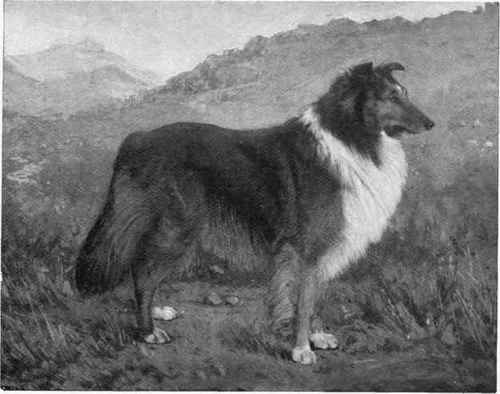
Fig. 42. - Mr. A. H. Megson's Rough Collie Champion Ormskikk Emerald.
Though numbers of three-figure sums have been paid for Collies, yet only on one occasion other than those recorded has £1,000 been given, that being in the case of Christopher, bought for America. One of the most remarkable Collie sales was in connection with the dog purchased by Mr. L. P. C. Astley at a provincial show, and that afterwards was sold as Ormskirk Golddust for £500, or about ten times the amount paid by the well-known fancier just named. The sales recorded are interesting as showing what prices are possible for the highest class stock, though the average amateur whose love for the variety may induce him to take it up as a hobby is hardly likely to either breed or pick up animals of the calibre of those associated with the names above mentioned.
The Collie Club has, by its influence, made our exhibited Collies en masse more homogeneous, and its influence has, on the whole, been to give more correct ideas to the public of what a true Collie is. Naturally, too, with a breed that existed primarily as a worker, one likes to see what influence for good or ill shows, and necessarily the encouragement of a more or less ornamental animal, have exerted. It is pretty generally admitted that we have to-day an animal of a more uniform type, as well as a more pleasing one, so far as regards the Rough variety; but the craze for an extra long head and one or two other mere externals for a time at least endangered the breed. Some of those outside the pale of the Fancy may wonder why it is not possible to have the taking coat and the workmanlike appearance in one and the same animal. The fancier knows that such is practically impossible so far as the Rough Collie is concerned, and for this reason. One of the glories of a typical Collie, judged from a show point of view, is his coat, and this would be utterly ruined if he were used as a sheep-tender. Moreover, from a pecuniary point of view, it need scarcely be pointed out which is the more valuable.
The late Mr. Hugh Dalziel was one of those who thought that the influences of shows tend strongly to deteriorate the dog in his capacity as a worker, and it must be confessed that there is more than a substratum of truth in what he more than once stated. It is, however, only fair to say the contrary opinion has been vigorously upheld by a good many owners of winning stock. These have supported their views by adducing numerous instances of prize-bred dogs that have proved excellent Sheepdogs. Instances coming under personal observation cannot decide the question, for the reason that they are numerically insufficient to draw safe inferences from. Rather have we to ask, To what causes may be attributed the wonderful sense and judgment and marvellous cleverness in dealing with sheep inherent in the Collie ? To this there can be but one answer: the constant education and practice in one particular work - and that in conjunction with a master - and the selection, generation after generation, of the progeny of the best to succeed to the work. Even the habit of running round a flock has become an inherited instinct, and, as Darwin points out, is seen in the action of the Collie when running round a carriage and heading the horses.
Continue to:


My Books

