


The Collies. Part 3
Description
This section is from the book "British Dogs, Their Points, Selection, And Show Preparation", by W. D. Drury. Also available from Amazon: British Dogs: Their Points, Selection And Show Preparation.
The Collies. Part 3
Other peculiarities that distinguish the Collie, and that are also the inherited result of education and long practice, specially aided by the selection of the best to propagate their kind, must of necessity become more and more weakly developed the farther we get from the sources that created and sustained them. Those who breed for exhibition, as already suggested, care in the main for points of beauty arbitrarily established, for the reasons adduced elsewhere. Breeders, therefore, working with such different aims, and selecting- animals for the stud on such widely different grounds as our shepherds and exhibitors do, must get wider and wider apart the farther they travel on their several courses. It is, however, quite possible to improve the outward dog without destroying the inward or intellectual Collie. There are some famous breeders of Collies - as there are of Fox and other Terriers - who send their dogs to be trained to the work for which by Nature they were intended to accomplish.
Competitive trials in gathering, driving, and penning sheep - of which there are a few held annually in Wales and the North of England - are most interesting from a spectator's point of view, and have a powerful tendency to maintain the practically useful character of this dog; but the greatest influence in that direction must always be our working shepherds, who with their trusty helps are scattered over our lonely hillsides. The placing of dogs that have been externally beautified in the hands of such men, and the drafting of good-looking and clever dogs from the shepherds to recruit the stock of exhibitors, prove mutually beneficial.
For the benefit of those who have not seen one of the Sheepdog trials, the following description, furnished by a correspondent to The Bazaar, may be interesting: -
"At many of the smaller agricultural shows in the moorland districts Sheepdog trials are held, and prizes given to the owners of those Collies that pen their sheep in the shortest time. Even at some of the 'sports' or ' feasts ' held in the dales these trials form an important and interesting feature of the day's proceedings, and the movements of the animals are keenly watched and commented upon by the many shepherds and sheep-farmers assembled. At some of the more important agricultural shows in Wales, Westmorland, and Cumberland dogs are sent from places far distant to compete. Although at each show the details of the trial may vary, still the general conditions under which the trials take place are similar.
At a small show in the Yorkshire dales, once visited by the writer, the greater part of the afternoon was devoted to these Sheepdog trials. The diagram (Fig. 43) will aid the description. The rules here were that each dog be allowed fifteen minutes in which to pen the three sheep, which were driven through the gate (c), having first to take them a circuitous route between various flags, and then, with the assistance of the shepherd, to drive the three sheep into a triangular pen, composed of three hurdles, another hurdle acting as a gate to the pen (d)
The three sheep were let loose, the shepherd or owner of the dog took his place beside the pen, from which he was not allowed to move, although permitted by hand, voice, and whistle to guide and encourage his dog. A rough idea of the performance may be gathered by a reference to Fig. 43. On the signal being given, the dog was allowed to go for the sheep, and had to drive them between the various flags (e) and the wall (a), then over the gap in the Wall (b), turn them, and, bringing them through the other flags, drive them into the pen within the space of fifteen minutes. Of course, in a trial of this description a large amount of luck or chance is bound to occur; in fact, the winner on the afternoon in question was greatly favoured in having a lot of sheep that of their own accord went between the two most difficult flags, and that were comparatively easy to pen. Still, it was most interesting to watch the almost human intelligence displayed by the various dogs, their absolute obedience to the slightest whistle, and, to the majority of the crowd, the unintelligible jargon in which they were ordered to perform their work. Gestures as well as words were employed, and the dogs at once recognised the signs when several hundred yards from their masters.
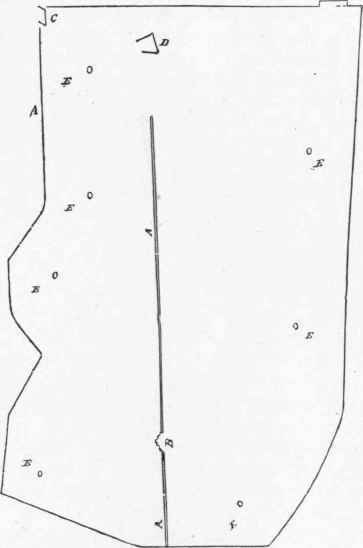
Fig. 43. - Diagram showing a Sheepdog Trial Course.
Rough, unkempt animals most of these Sheepdogs were, too, and far removed in appearance from the Collies one sees on the benches at the dog shows; and yet, despite their appearance, these dogs are simply invaluable to their masters, and are instrumental during the heavy snowstorms which occur in the dales in saving the lives of scores of sheep by their wonderful sagacity. Locally they are termed 'curs,' not Collies, and in colour are chiefly black-and-tan, some long coated, others quite smooth, but all with that look of intelligence in the eyes that is only seen where the dogs enjoy constant companionship with man. In the case of the dogs shown here, each one from puppyhood had been in the company of man night and day, and appeared able to instinctively comprehend the desires and wishes of his master. To the dog lover a trial of this description is most interesting and instructive, as showing how the intelligence of the animal can be so trained as to become a most valuable auxiliary to man. At the trials in question, however, the sexes were not divided, and it was noticeable that the bitches were, as a rule, much smarter and sharper in their work than the dogs.
In some of the trials the sheep got utterly out of hand, and jumped the high stone walls, whilst in others they went quietly and were easily guided. The winner succeeded in penning her sheep in about twelve minutes, whilst at the termination of the fifteen minutes allowed, many of the dogs had" not succeeded in getting their sheep half-way round the appointed course. Any smart or clever piece of work on the part of the dogs was vociferously applauded, and those present were loud in their praises of the excellent work put in by the winner. Doubtless the winner will figure at all the shows in the district where similar trials take place, and will considerably add to the income of her owner, whilst the work performed is really additional training for the bitch, and should add to her value. Pedigree in these dales is of little consideration in comparison with working-blood, and appearances do not count for much unless accompanied by the ability to do good work on the wild, open pastures or still wilder heather-clad moorlands. After the trials were over, considerable discussion took place as to the relative merits of the various competitors; but so much depends upon luck and upon the manner in which the sheep act, that it is not always the best dog that succeeds in winning the coveted prize."
Continue to:


My Books

