


Chapter VIII. Kennel Management
Description
This section is from the book "Toy Dogs And Their Ancestors", by Neville Lytton. Also available from Amazon: Toy Dogs And Their Ancestors: Including The History And Management Of Toy Spaniels, Pekingese, Japanese, And Pomeranians.
Chapter VIII. Kennel Management
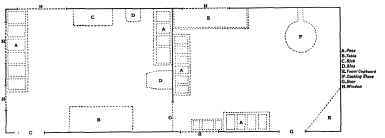
The floors of the ideal kennel should be asphalted and kept sprinkled with sanitary sawdust. Such kennels will cost about £20 to £60, according to size, and are specially suitable where a very large number of dogs are kept. They should be provided with a stove at each end to be lighted during the cold winter nights. The dogs should be shut into the inner compartment at night, and the sliding door into the outer run opened during the day so that they can get plenty of fresh air and see out into the world. For a smaller number of dogs nothing could be more ideal than my kennels, the dimensions of which are 35 ft. x 13 ft. x 6 ft. (to the eaves). I designed the arrangement of them myself, but got the smaller building from Longbottom of Nafferton Works, Hull, for £13. At my request they put in two doors and five large windows. I added an extra thick roofing of felt, also cupboards, tables, a sink, pens, and a stove. This kennel could not possibly be more convenient, nor, I venture to think, less expensive for its large size.
I should be pleased to show all my arrangements to anyone who wished to build a similar one, as experience has proved it perfect in practical workableness.
Building No. 2 is raised from the ground on brick piles, and has a wooden floor. It is well tarred outside to keep away damp and draughts, and can be matchboarded inside if the extra expense is no consideration. The windows are very pretty with no horizontal iron bars but only the perpendicular ones. Each pane of glass overlaps the other, indicating the cross lines. I consider that large windows are essential to the well being of the dogs. They must have light and sunshine, and the kennels should be built facing south. Kennel No. 1 is of wood, with small brick foundation and corrugated roof. Kennel No. 2 is of weather boarding, with tarred felt roofing.

A.8ieeplng Pens A2.Day Pens
B. Drying Pens C.Portabis Stous
C.2 Cooking Stove
D.Cupboard
E..Table for cutting up & preparing food
F.Sink
G. Drying Table
H.Boiler
I. Sleeping Room
J. Sliding Door
The doors of the steeping compartments are made in two parts like those of a cow stable

Boulton and Paul, Rose Lane Works, Norwich, have many splendid designs of kennels and runs at most reasonable prices. I illustrate two of these which are particularly good. There is, of course, no heating apparatus in these.
A. Neaverson, of Peakirk, Peterborough, sells a beautiful puppy-run on wheels in several sizes from 5 ft. x 2 ft., or a very useful size 9 ft. x 3 ft.
To avoid mice in a kennel, keep a cat. If a kitten is reared with the puppies and knocks about with other dogs they will all get on together splendidly. Nothing keeps off rats and mice like the presence of a cat. They get too artful to go into traps.
If there is a large open space that can be wired in outside the kennels, so much the better, as the dogs can then run all together on fine days, and bask in the sun. Do not let them out on rainy days, as damp is very bad for them, much worse than cold. Should they accidentally get wet, they must be rubbed thoroughly dry immediately on coming in. Give as much exercise as possible, and change the drinking water often. Except as a fetish, it is useless putting lumps of sulphur in their water, as sulphur is as insoluble in water as a lump of china. Feed twice a day on brown bread, hound meal, Melox, biscuits, boiled sheep's heads, or meat, as you find they do best. Never allow a dog to take a bone into its bed, as much ill temper and furious fighting will be the result. Toy Spaniels have very delicate eyes that are soon injured in a fight, and, once disfigured by a white film over the eye, a dog is greatly handicapped for show.
For inflammation of the eyes a weak solution of saltpeter and water is most beneficial, or, better still, Shirley's eye ointment. For cases where a white speck forms, a minute quantity of powdered calomel, as much as will go on the extreme point of a small penknife, may be gently dropped into the eye, which is then closed, and very softly but thoroughly rubbed for a few minutes. I got this prescription from Miss Dillon, who had it from a well-known French vet, and, though I have been repeatedly told by English vets, that it would injure the eyes, I have found the reverse to be the case. This treatment once daily often succeeds with chronic white films, where all else has failed, but should not be used in acute cases. A crushed poppy head boiled in a pint of water for five minutes and strained through fine muslin with a small teaspoonful of boracic acid added is a good thing where the inflammation is severe. It should be applied hot to the eye several times daily. The dog should be kept as much as possible in the dark, and its feet must be tied up in bags, as the eyes are so very irritable that the dog will tear frantically at them and often destroy his sight permanently.
Of course, there are some injuries the scars of which nothing will remove, as when the tissue of the eye is permanently damaged. It may be considered absurd, but I advise all owners who wish to preserve their dogs to a good old age to brush their teeth every day with a soft badger's hair tooth brush. Toy dogs are very liable to a decay of the teeth, which is the cause of unpleasant breath and indigestion. Powdered bicarbonate of soda is a good tooth powder and is perfectly harmless. In fact, it can, if accidentally swallowed, do nothing but good. After brushing, the teeth should be wiped over with a pad of cotton wool wrung out in some good, non-poisonous disinfectant. I use chinosol. If the teeth are brown with tartar they should be properly scaled by a veterinary surgeon, unless the owner is very skilful and can trust himself not to cut the dog's gums with the instrument. The great secret of healthy dogs is plentiful disinfecting and perfect cleanliness.
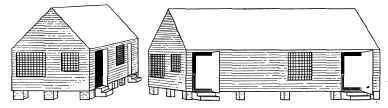
If the kennels smell "doggy," they are not properly scrubbed. A barrel of disinfectant should be kept always ready and liberally used. The money spent in this way will not be wasted, for an epidemic of skin disease is far more costly than any amount of disinfectant Use a lot of sanitary sawdust, and scrub your kennels like the decks of a ship, and you will never have much disease to complain of. Fleas and lice may be successfully eradicated by applications of a powder called Insect Death, to be obtained from Rowland Ward, The Jungle, Piccadilly. No well-kept dog should have either of these pests, which are always a sign of neglect, though all dogs are liable to pick up an occasional specimen of both, especially in the spring, but they are easy to get rid of and need cause no alarm. I have a special preparation of my own for lice which destroys both them and the nits in one dressing.
Let me here warn breeders and exhibitors against drugging their dogs. Never give them tonics of any sort unless they are just recovering from a severe illness, and then not for long at a time. Never give condition powders for show, or give any medicine whatever unless it is rendered imperative by some emergency. I never give my dogs any drugs, and they do not require any. Even aperients are not required for a dog that has proper food and exercise. I cannot too strongly condemn the practice among some breeders of giving arsenic to improve their dogs' coats. Whether this pernicious practice has any effect on the dogs' coats I cannot say, but I am inclined to doubt it. In any case, it certainly would impair the health of the individual, and eventually the breed would suffer. The finest and best coats can only be got by washing and keeping the dogs in perfect health; and I venture to say that perfect health is incompatible with constant drug taking either in dogs or in human beings. If you are obliged to use medicines, use Shirley's preparations, and do not spend large sums on vets.
Some Toy Spaniels cannot eat bones without getting stoppage, and in matters of diet owners must be guided by individual peculiarity.
Feed kennel dogs on Osoko, Molassine biscuits, soup, meat, boiled paunches, a little green vegetable, and wholesome scraps. Avoid salt and potatoes. Molassine biscuits are particularly good for delicate feeders and Spratt's malted meal is excellent for puppies.
Continue to:


My Books

