


Dentition Of The Horse At Various Ages - II
Description
This section is from the book "The Horse - Its Treatment In Health And Disease", by J. Wortley Axe. Also available from Amazon: The Horse. Its Treatment In Health And Disease.
Dentition Of The Horse At Various Ages - II
A. ElGHT-MOXTH-OLD THOROUGHBRED (female).
1, 2, 3. Temporary molars.
4. Permanent molars.
5. Permanent molars (uncut).
6, 7, 8. Crowns of temporary molars.
9, Crown of permanent 4th molar.
10, 11, 12. Central, lateral, and corner temporary incisors.
B. SlXTEEN-MONTH-OLD THOROUGHBRED (female).
1, 2, 3. Temporary molars.
4, 5. Permanent molars.
6, 7, 8. Crowns of temporary molars.
9, 10. Crowns of permanent molars.
11, 12. 13. Central, lateral, and corner temporary incisors.

Plate LXIV. DENTITION OF THE HORSE AT VARIOUS AGES-1I.
A. Eight-month-old Thoroughbred (female). B. Sixteen-month-old Thoroughbred (female).
So far as the appearance of the incisor teeth is concerned, it will be noticed that it closely coincides with that of the mouth of the horse at five years old (fig. 613). The prominent difference, however, is that all the teeth are temporary in the one case and permanent in the other. The presence of the tusks, or in their absence the existence of six permanent molars, in the five-year-old horse, will prevent any mistake being made as to the animal's age. It has already been stated that in the case of forest ponies an error in regard to the animal's age is quite possible unless the difference between temporary and permanent teeth is recognized.

Fig. 606. - Molar Teeth of Colt at one year.

Fig. 607. - Molars of Colt at two years.
Between one year and two years of age the only change in the incisor teeth is that which is naturally consequent on growth of the teeth and the wear of the upper surfaces by attrition. At the full age of two years the upper surfaces of all the incisor teeth are worn flat, and the tables, which is the name given to the worn surface, are fully formed, which means that there is a complete line of wear running round the central cavity (infundibulum or mark). Occasionally there is an exception in the posterior or inner edge of the corner tooth, the wear of which is not quite complete.
In the two following figures the appearance of the incisors and molars at two years old is shown (figs. 607, 608).
Any question which may arise as to the distinction between one and two years is settled at once by reference to the molar teeth. Shortly before two years of age a fifth permanent molar begins to prick through the gum, and at the completion of the second year the erup-tion is nearly perfect, as shown in fig. 607.
The colt has now a full set of temporary incisors in front of the mouth, top and bottom, all of them showing a year's wear on the surface, with three pre-molars (temporary) on each side, top and bottom, and two true molars (permanent) on each side, top and bottom.
Changes which occur in the teeth up to the age of five years will include the falling of the temporary organs and their replacement by permanent teeth, the cutting of the tusks in the horse, and the eruption of two molars - the third and sixth in situation.
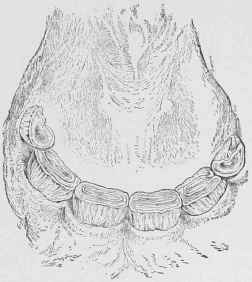
Fig. 60S. - Incisors of Cart Filly at two years.
Continue to:


My Books

