


Fitting Shoes. Care In Fitting
Description
This section is from the book "The Horse - Its Treatment In Health And Disease", by J. Wortley Axe. Also available from Amazon: The Horse. Its Treatment In Health And Disease.
Fitting Shoes. Care In Fitting
Very few horse-owners appreciate the importance of care and exactness in fitting shoes to horses' feet, and yet this part of the operation of shoeing may render a perfectly-formed shoe an instrument of torture, and cost the owner more than the price of a hundred sets of shoes.
Too much care in fitting the shoe to the foot cannot be taken, and as care means time, the folly of valuing shoeing by its cheapness will be evident. Cheap work is done by unskilled men or by skilled men in a hurry. Under either condition it cannot be careful and exact, therefore the horse suffers. One reason why bad shoeing is tolerated is that its evils are not always immediately indicated, and then the results are credited to other causes. Quite a third of the ill effects to horses' legs that are supposed to be due to hard work are really the result of injury to the feet. The grosser injuries cause acute lameness and are detected, but the finer injuries cause only tenderness and discomfort, which is overlooked, and so continued for months. The effects are seen in bent knees, shot fetlocks, loss of action, and a shuffling gait, which combined shorten the profitable working lives of horses by years. And yet horse-owners will invite this for the supposed economy of eight or ten shillings a year on their shoeing bill!
Having brought the hoof to the best form and proportions, the farrier selects a shoe suitable for it in size, weight, and shape. His next duty is to alter it so that in every detail it shall be exactly adapted to the foot upon which it is to be nailed - in other words, he " fits" it to the foot. There are two distinct objects to be achieved in fitting. First, to make the outer border of the shoe correspond to the circumference of the wall. Second, to make its foot surface rest evenly and closely on the bearing surface of the foot. Feet differ in shape; some are nearly round, others nearly oval, whilst many are very irregular, but they are never geometrical figures. Were there a definite form, shoes might be cast in a mould and applied without special fitting. The more ignorant of the hundreds of inventors of horse-shoes are quite unaware of this, and hence the stupid but plausible claim that their shoe " may be fitted to the foot by a groom or stableman". The fact is, every shoe must be fitted to the foot upon which it is to be fixed, and in this is the great art of the farrier's trade.
Circumferential Fitting is the adaptation of the shoe to the length and breadth of the hoof, so that the wall of the foot may rest firmly upon the shoe throughout its whole bearing surface. In producing this "fit" attention must be paid to the nail-holes, so that they are brought into the safest and best position for the nails to be driven through into the horn. The outer border of the shoe should correspond exactly with the circumference of the wall all round, except perhaps at the heels. In horses doing fast work the shoe should be fitted close, even at the heels, and especially on the inside of the foot. The outer side of the foot may be always fitted a little " fuller" or wider than the inside. The heavier horses may have the heels of a shoe fitted wider than the hoof, and this especially when calkins are used, because a firmer base of support is given by a shoe when the heels are wide than when they are narrow. A shoe should always be fitted full to the foot, i.e. not within the edge of the wall. When shoes are fitted close, and neatness of appearance valued as highly as sound work, there is a tendency for men to make the foot fit the shoe. This is done by roughly and carelessly approximating the border of shoe to the border of foot, keeping the shoe a little within the edge of the wall, and, after nailing it on, levelling the work by rasping away any prominent horn. In some strong, well - grown feet this may do no harm, but it is a bad habit, certain to do injury when a weak foot is being operated on. The length of a shoe is important. It should be the full length of the bearing surface of the foot. When longer it may injure the horse's elbow when he lies down, and on the front foot may be struck by the hind shoe and pulled off. The fore shoes of hunters are always fitted short to avoid this (fig. 642), but in many cases they are unnecessarily short. A short shoe is objectionable for many reasons - it loses some of the natural bearing of the foot, it is likely to cause a corn by bruising the sole at the heel, and it carries forward, out of its proper relative position to the limb, the base upon which the horse stands. On a hind foot there is no excuse for fitting a shoe short. It stands no risk of being pulled off by another foot, it cannot injure any part of the limb when the horse lies down, and so the hind shoe should always be longer than the foot, especially when calkins are used.
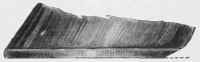
Fig. 642. - Shoe Fitted Short at the Heel.
Surface fitting is the adaptation of the plane foot surface of the shoe to the level bearing surface of the foot. The shoe should rest evenly upon the hoof from toe to heel, the pressure being uniform throughout. Should either the foot or the shoe not be level some parts lose bearing, and others sustain an uneven and excessive bearing. It is not uncommon to find a shoe fitted so that its centre is higher than either heel or toe. Such a shoe rests unevenly on the quarters of the foot, and as the wall is there weak, we often find the horn broken as the result of excessive bearing. Flat feet present the sole more prominently at the toe than at other parts, and therefore care is required, when fitting shoes to them, that the inner edge of the toe of the shoe should not bear upon this part. Special care must always be taken to avoid any undue or uneven pressure by the heels of a shoe upon the angle of sole between the wall and the bars. When the horn of the wall is detached from the sole or badly broken, it must be relieved of all bearing either by lowering it with the rasp or by fitting the shoe so that there is no contact between the two. A very injurious method of fitting shoes followed upon an erroneous theory to the effect that the heels were unable to stand their share of bearing as well as other parts of the wall. With a view to save the heels of the foot, shoes were what is called "eased" or "sprung" at their extremities (fig. 643). This system of fitting left a space between shoe and foot at the heels into which the blade of a knife might be passed, and the space extended forward from an inch to an inch and a half.
The fact is that the heels will stand, and they require, all the bearing a level shoe can afford. The " eased" heel is altogether an injurious thing. It loses bearing surface, and concentrates pressure on the spot where foot and shoe come into contact. Instead of affording ease, it causes an on-and-off pressure every time the foot is brought to the ground during progression. The surface fit of a shoe should be an even and level one from toe to heel.
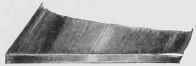
Fig. 643. - An "Eased" Heel.

Fig. 644. - Shoe with Level Bearing.

Fig. 645. - Shoe Imitating a Worn Ground-surface.
Continue to:


My Books

