


Wrought-Iron Girders
Description
This section is from the book "Notes On Building Construction", by Henry Fidler. Also available from Amazon: Notes on building construction.
Wrought-Iron Girders
Rolled "Wrought-Iron Beams
The manufacture of wrought-iron beams or joists has been so much improved of late years that they can now be rolled to any size that is likely to be required in ordinary buildings.
In section (see Fig. 255) they somewhat resemble girders made of cast iron, except that both flanges are of the same size.
Rolled beams may ordinarily be obtained of various sections, from 3 to 20 inches in depth, and have been manufactured up to a depth of even 3 feet; but for a greater depth than 12 inches a built-up girder, such as one of those described below, is usually preferable.
The reason for this is that the number and thickness of the plates used in a built-up girder may be varied at different parts of it, in proportion to the stresses which come upon those parts; whereas, in a rolled girder, the thickness of the web and of the flanges is necessarily unvarying throughout, and if, therefore, these are thick enough to withstand the greater stresses, they are too thick in those portions where the smaller stresses occur.
Compound Boiled Iron Girders
Sometimes two or three rolled iron beams are riveted together with or without plates attached to them (see Figs. 256, 257).
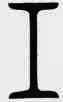
Fig. 255. Rolled Beam.

Fig. 256.

Fig. 257. Compound Rolled Iron Girders.
Continue to:


My Books

