


Soap Bubbles
Description
This section is from the book "How To Build Games And Toys", by B. W. Pelton. Also available from Amazon: How To Build Games And Toys.
Soap Bubbles
The apparatus required for blowing soap bubbles is simple, and with a little care and foresight will absorb the interest of children of both sexes and varying ages for relatively long periods of time.
The Soap Solution
Experts claim that the coarser brands of soap produce the brightest bubbles. However this may be, it is generally conceded that a soap mixture containing glycerin will produce the toughest films. A recommended mixture is two-thirds of a quart of hot water (preferably rain or distilled water), to which a heaping tablespoonful of castile or palm-oil flakes has been added. When the soap has dissolved, add four tablespoonfuls of glycerin, stir or shake vigorously, and either syphon off the clear liquid or strain it through a cloth. After it has stood until thoroughly cool, coloring can be added for variety.
With such a solution, the bubble film will be tough enough to blow bubbles within bubbles. If Father is a smoker, perhaps he can be persuaded to complete the blowing of a well-started bubble with a puff of smoke, thus creating a bomb which gives off smoke when it bursts.
The Pipe
Although clay pipes have been traditionally considered requisite for blowing soap bubbles, almost any tube will do, such as a spool, provided it is first dipped into the soapy water. Another satisfactory blower is an ordinary soda straw, with its bubble end split into four small segments which are bent outward, horizontally. A soda straw thrust through a spool will make an excellent pipe for blowing large bubbles. In fact, large bubbles can be blown by covering the bare hands with soapy water and cupping them together as illustrated in Figure 6.8, leaving a small opening at the bottom for blowing. When the mouth is held a foot away from the cupped hands, large but rather fragile bubbles can be blown without other equipment.
Accessories And Stunts
Wire rings of about 3 in. diameter, twisted from coat hanger or other wire, after being dipped in the soap solution, will serve as portable rests upon which bubbles can be blown and carried around.
Barrel
If two wire rings of the same size are made up, an interesting experiment can be performed by first dipping them in the soap solution and blowing a large bubble upon one of them. The second ring is then held in a plane parallel to the first ring, on the bubble side, and brought gently into contact with the bubble until it adheres to the ring. Both rings are then slowly separated, stretching the bubble into an elongated barrel shape. At this point a second person can, with care, insert the wet bubble tube and blow a smaller bubble within the barrel. When detached from its pipe, the small bubble can then be rolled back and forth within the "barrel."
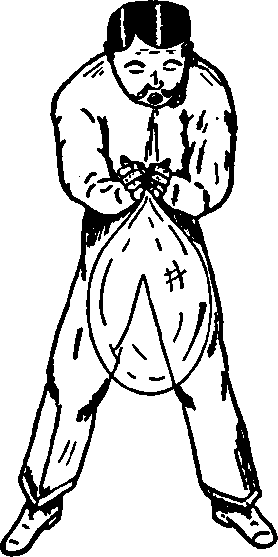
Fig. 6.8. Blowing bubbles without a pipe.
Balloonist
Cut out a small figure and attach a short length of light cotton thread to its head. Knot the free end of the thread through a small paper disk. Now blow a large bubble and stick the paper disk to its bottom.
Double Bubble
Pour a small quantity of the soap mixture into a saucer and place a small spool upright in the center. Lay a nickel or a quarter on the top of the spool and drench them both with the soapy water. Then dip the soda straw or tube end of the pipe into the soap solution in the saucer and blow a large bubble, at least the diameter of the dish. Without removing the tube, blow a smaller bubble atop the coin on the spool, and withdraw the pipe gently. After successfully blowing this bubble-within-a-bubble, try blowing a triple bubble in the same way. If the inner bubble is filled with smoke, the effect is most interesting.
Bubble Badminton
Stretch a cord between two chair backs of equal height and divide the players evenly on both sides of the "net." Each player is provided with a fan or folded wedge of newspaper. The bubble ball or "bird" must be wafted over the net by air currents only, for of course if it is struck it will burst, gaining a point for the other side.
Continue to:


My Books

