


147. Mineral And Organic Acids
Description
This section is from the book "Applied Science For Metal Workers", by William H. Dooley. Also available from Amazon: Applied Science For Metal Workers.
147. Mineral And Organic Acids
There are two kinds of acids - organic and mineral. Organic acids are those, such as carbolic acid, oxalic acid, etc., which contain the element carbon in their composition. Mineral acids are those composed of any of the other elements, such as hydrochloric acid, nitric acid, and sulphuric acid, and are used principally in the trades and industries.
Nitric acid is largely used in the manufacture of explosives, and hydrochloric acid as a "pickling" liquor for cleaning metals. When nitric acid is added to some metals, it acts very quickly, and gives off reddish brown fumes that are suffocating in their effect.
The change that takes place is represented by the following equation:
3 Cu | + | 8 HNO3 | = | 3 Cu (NO3)2 | + | 4 H1O | + | 2 NO |
Copper | Nitric Acid | Copper Nitrate | Nitric Oxide |
The copper nitrate and water remain and the gas (nitric oxide)
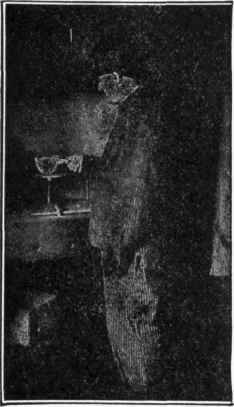
Fig. 67. - One Step in the Analysis of Iron. The iron is carefully weighed and then dissolved in acid over a lamp.
passes off. Ordinary commercial nitric acid has a specific gravity of 1.42 and contains about 68% of acid.
Sulphuric acid, often called oil of vitriol, is the most important chemical used in manufacturing operations. Its symbol is H1SO4 and in a diluted or weak form it acts on metals. When concentrated or strong it forms on the metal a coating of a salt which prevents further action.
The action of the acid on a metal may be represented by the following equation:
Fe | + | H 2SO 4 | = | FeSO 4 | + | H1 |
Iron | Sulphuric Acid | Iron Sulphate |
Muriatic, or hydrochloric, acid is generally made by the action of sulphuric acid on salt.
The action may be represented by the following equation:
2 NaCl | + | H 2SO 4 | = | Na 2SO 4 | + | 2 HC1 |
Common Salt Sodium Chloride | Sulphuric Acid | Sodium Sulphate | Hydrochloric Acid |
Continue to:


My Books

