


A Plant Stand Or Taboret
Description
This section is from the book "Amateur Work Magazine Vol3". Also available from Amazon: Amateur Work.
A Plant Stand Or Taboret
Francis L. Bain
The tabourette about to be described may be made of either whitewood, basswood, or any dark colored hard wood, such as walnut or mahogany. If whitewood is used it may be stained in imitation of nearly any hard wood, while if basswood is used, an opportunity is presented for doing a little pyrography.


Fig. 1

Fig. 2.
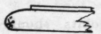
Fig. 3.

About six feet of 7/8" stock, 13" wide, will be required, and it should be thoroughly dry, as well as free from knots or checks of any kind. Well dried stock is always preferable, but especially so when the different pieces are very wide in the finished article. If it is not possible to get the stock 13" wide, use 7" instead, gluing two pieces together to obtain the required width. As the thickness of the five pieces which make the stand is the same (3/4") it is perhaps as well to plane the six feet of stock to that size before laying out any details. Cut the board into five pieces, as follows; - 2 pieces 18 long, 2 pieces 8" long, 1 piece 13" long. The 18" pieces are for the two long sides of the stand, and should be laid out very accurately and carefully according to the figures in the detailed view of the long side.
It will be seen that an expansion bit can be used to cut out that portion of the upper part of the design where a radius of 3/4" is designated. This method should always be used when possible, as it is often difficult to cut out very small curves, and an expansion bit with the usual two cutters will answer for all holes from 1/2" to 3" in diameter. The balance of the curves may next be sawed out with either a keyhole saw or pad saw, and carefully smoothed with Nos. 1 1/2 and 0 sandpaper, a half round file first being used, if necessary. Then the sides and ends should be planed to the proper size and shape.
The two short sides should next be laid out, and finished to the proper size and shape, in practically the same manner as were the long sides, except that the expansion bit is not used. The top is to be made next, the dimensions being 12" x 12" x 3/4". After planing to the proper size, a line should be drawn on the upper side 3/4" from and parallel with each edge. Another line should be drawn on the edges 1/8" down from and parallel with the top side. These measurements are clearly marked on the corner view in Fig. 1. These lines should then be "scored " with a sharp knife, and the corner, 3/4" wide by 1/8" deep, removed with a chisel and mallet. The square corners of the projecting lip should be beveled off slightly around as shown in Fig. 2, and the edge should then be finished to the shape as shown in
Fig. 3, a plane and sandpaper being used to accomplished this and a flat file if necessary.
The sides and top are attached to each other and held firmly in place by means of corner blocks screwed to the inner face of each side and the top by means of 1 1/4" No. 9 wood screws. Four of these pieces should be made of pine or whitewood, the finished size being 7 1/4" x 3/4" x 3/4", two being screwed to the inner surface of each of the short sides, just flush with the lengthwise edges. The four sides should then be clamped firmly together in their proper position, and while in the clamps screws should be driven through the corner pieces into the long sides, thus securely attaching the sides together. Now cut out four more corner blocks similar to the first set, which shall finish 5" x 3/4"x 3/4" and screw these to the inner faces of the four sides, exactly flush with the top. Then having first drawn an 8" square in the centre of the underneath side of the top to show its proper position when in place, turn the stand upside down with the top resting upon the bench and screw through the corner blocks into the top, thus fastening the whole stand firmly together.
It will now be necessary to give the stand a thorough cleaning with fine sandpaper, after which it may be decorated with pyrography, or stained according to the stocks elected at first. This stand is especially intended for large, heavy plants such as palms, ferns, etc.
Continue to:


My Books

