


How To Do Inlaying. Continued
Description
This section is from the book "Things To Make In Your Home Workshop", by Arthur Wakeling. Also available from Amazon: Things to Make in Your Home Workshop.
How To Do Inlaying. Continued
The mirror shown in Fig. 36 is suitable for a hall, a parlor, or a bedroom. The four pieces forming the frame are first squared to dimensions, after which the rabbets are cut for the glass. They are then joined in the corners with dowels as shown, glued, smoothed and sanded.
The grooves for the inlay are cut with the marking gage, the head bearing against the outside edges of the wood. The insert is glued in place as described above, after which the whole frame is scraped and smoothed. A small bead as indicated in Fig. 36 may be cut with an ordinary marking gage on the inside edges of the frame after it has been glued together.
The top piece is glued to the top of the frame after the insert and the turned rosettes have been glued in place. The joint is covered by a piece of molding, which can either be bought ready made or worked out with a gouge, scraper and sandpaper.
The backing should be of soft pine or whitewood and nailed in place. It is a good plan to place several Layers of paper between the glass and the backing.
Materials For Tray, Frame, And Tea Table
No. | Pes. | T. | W. | L. | Part |
Serving Tray | |||||
1 | ⅜ | 10 | 18 | Bottom | |
2 | ⅜ | 1 | 17% | Sides | |
2 | ⅜ | 1% | 10 | Ends | |
2 yds. | Inlay | ||||
1 | Center insert | ||||
4 | Corner inserts | ||||
Mirror Frame | |||||
2 | 1 | 2¾ | 25¾ | Sides | |
1 | 1 | 3½ | 10½ | Top | |
1 | 1 | 4¾ | 10½ | Bottom | |
1 | ¾ | 4¾ | 16 | Top | |
1 | ½ | 1½ | 17 | Bottom | |
1 | ¾ | 1¼ | 19 | Molding | |
1 | ⅜ | 12 | 19 | Backing | |
2 | 3/16 | 1½ | Rosettes (turned) | ||
2 | Inserts | ||||
5 yds. | Inlay | ||||
1 | ¼ | 11¾ | 18¾ | Plate glass | |
Tea Table | |||||
2 | 1 | ¼ | 1¼ | 30½ | Frame |
2 | 1 | ¼ | 1¼ | 8 | " |
1 | 1 | ¼ | 1¼ | 18½ | " |
4 | 1 | ¼ | 5 | 8½ | " |
1 | 1 | 3¼ | 29 | Lower brace | |
1 | 1 | 2 | 29 | Upper " | |
1 | ½ | 18 | 24 | Tray | |
1 | ¾ | ¾ | 78 | Molding | |
2 yds. | Inlay | ||||
1 | Insert | ||||
2 | ¾ | 1½ | Hinges | ||
1 | Catch | ||||
All dimensions are in inches except where otherwise specified. | |||||
The tea table shown in Fig. 37 is a piece of furniture that is a little out of the ordinary. It consists of a tray hinged to a frame.
The frame is very simple of construction, consisting of five pieces joined by doweled joints. The vertical sides each have two shaped pieces of the same thickness as the frame glued to them. These pieces may be beaded on the edges as shown by first gaging the beads with a marking gage and then slightly rounding them with chisel, scraper, and sandpaper.
The two sides of the frame are joined with the shaped stretcher at the bottom, which is mortised into them and glued in place. The piece to which the tray is hinged is glued and screwed to the frame.
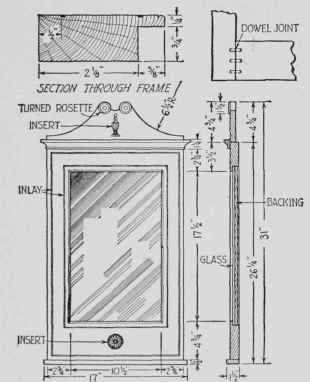
Fig. 36. - A mirror of rare charm with inlaid lines, decorative inserts, and rosettes.
The tray, which is ½ in. thick, is inlaid as shown, after which a molding is fitted and glued in place flush with the edges. It is hinged to the crosspiece in such a way that when it is in the horizontal position it projects an equal amount on each side of the frame. The hinges should work rather stiffly so that the tray will not tip when placed in the vertical position. When used for serving tea ( in the horizontal position), it is prevented from tipping by a catch, which locks it securely to the crosspiece.
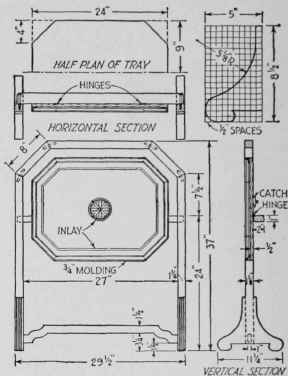
Fig. 37. - When this distinctive tea table is not in use, the top stands upright.
If mahogany is used for the three pieces of furniture described above, it is recommended to stain it with lime dissolved in water, as this does not discolor the inlay. If stained with bichromate of potassium or ordinary stain, the inlay has to be scraped afterwards with a very sharp knife to remove the stain, and this is a rather difficult and tedious process.
Continue to:


My Books

