


The Viewpoint Of The Lender
Description
This section is from the book "Elementary Economics", by Charles Manfred Thompson. Also available from Amazon: Elementary Economics.
The Viewpoint Of The Lender
The lender also knows that capital is productive, but that in itself does not explain satisfactorily why he saves rather than spends his capital. Saving means abstinence for the ordinary individual, and, as we shall see, modern production bids for the savings of all regardless of wealth and income. Furthermore, it is a human characteristic that the normal man prefers present goods to future goods - that is, present consumption to future consumption. This characteristic is most prominent among primitive peoples and among children. The American Indian seldom ever stored food for future consumption, though he was aware from experience that famine might be expected before the approaching winter was over. Most boys and girls would rather eat their candy or cake today than to wait until tomorrow. Even older children often prefer to see a second-rate film today to a much better one next week. Even adults are not free from this form of impatience, though as a general rule it is less prominent among them. Since most of us value present goods more highly than future goods, it follows that some inducement must be held out to us to cause us to postpone consumption - that is, to exchange present goods for future goods. This inducement we call interest. It is the price for waiting. Different people set different prices on the pain of waiting. Some demand a very high reward, some a more moderate one, a few have no preference, while occasionally we are able to find an individual that actually prefers future to present goods. We may arrange the various savers in the manner as shown on opposite page.
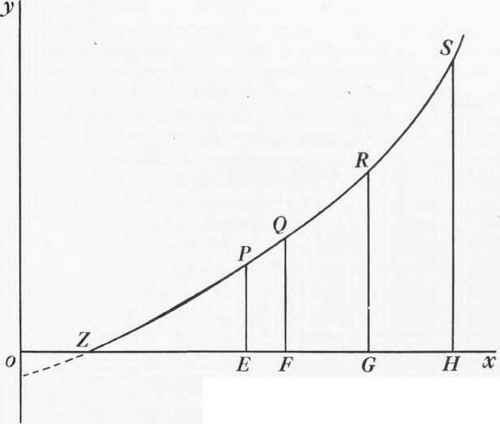
Fig. 12.
Those to the left of Z will pay to be permitted to save, and those at Z will save without reward. As we move along the curve to the right of Z the price demanded for abstinence rises. E demands EP (4 per cent); F demands FQ (5 per cent); G demands GR (8 per cent); while H, who has the least desire to postpone consumption, demands HS (12 per cent).
Continue to:


My Books

