


Green Tea
Description
This section is from the book "Beverages And Their Adulteration Origin, Composition, Manufacture, Natural, Artificial, Fermented, Distilled, Alkaloidal And Fruit Juices", by Harvey W. Wiley. Also available from Amazon: Beverages And Their Adulteration.
Green Tea
In the manufacture of green tea the principal point to keep in view is to prevent any oxidation or darkening of the leaf. As this oxidation starts practically as soon as the leaf is plucked, it requires great skill and celerity to produce a high-grade tea. The production of green tea, insofar as at present is known, requires hand labor exclusively. Inasmuch as the oxidizing effects are produced by an enzyme it is important in making green tea to kill this ferment as soon as possible.
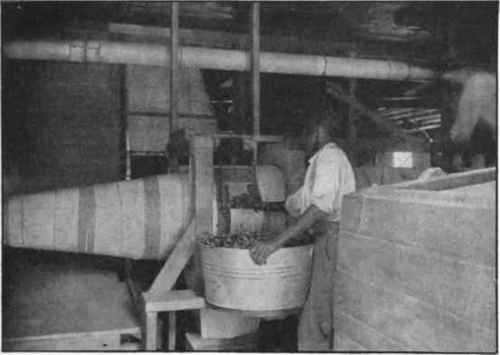
Fig. 15. Loading end of sterilizer to destroy enzymes. (Bureau of Plant Industry, U. S. Dept. of Agriculture.)
This is accomplished by subjecting the fresh picked leaf to a high temperature. Dr. Shepard invented a rotary steam heated sterilizer for this purpose. This cylinder is so constructed that it may be fed continuously at one end and the cured leaves are constantly being delivered from the other end. It requires about 7 minutes for the complete process. After the enzymes are destroyed by this process the leaves are ready for rolling and firing.
Tea made in this way is necessarily very expensive and so the art of artificially coloring a tea green to resemble tea made as above has been devised. It is certain that very little green tea is now imported into the United States which has been adulterated by coloring. It is claimed, and it is doubtless true, that the green teas at Pinehurst gardens near Summerville are not "faced" and are genuine unadulterated teas.
Continue to:


My Books

