


Production Of Cocoa
Description
This section is from the book "Beverages And Their Adulteration Origin, Composition, Manufacture, Natural, Artificial, Fermented, Distilled, Alkaloidal And Fruit Juices", by Harvey W. Wiley. Also available from Amazon: Beverages And Their Adulteration.
Production Of Cocoa
The small seeds which make cocoa have quite a peculiar manner of growth. Most fruits and nuts are borne upon the new growths of the tree. The cocoa seeds grow in large pods and are attached to the older parts of the trunk or the larger limbs of the tree. This is shown in a striking way by a branch of the tree to which the pods are attached, as indicated in the figure.1 The relation of the pods to the leaf is also best shown by an illustration.2 The cocoa tree like coffee requires, in very hot climates, a shelter to promote especially its early growth. This shelter is usually provided by planting it under another tree of larger size. The tree begins to bear at about the seventh year, and it reaches its full growth about the tenth year. The yield of cocoa per tree is very small. The average for trees of 10 years is only about one pound each. The cocoa tree grows to a height of 20 or 30 feet. It is an evergreen, and usually the diameter of the trunk near the ground on a full grown tree is from 6 to 12 inches. It is a continual bearer, though the heavier crop comes in the spring. The blossom is a very small one, almost white but with a pinkish tint, and looks very much like an artificial petal made of wax. As already stated, instead of growing on the new wood it grows directly out of the trunk or larger branches of the tree and the fruit is harvested by long poles something like the long handled knives which are used for pruning apple and other fruit trees. The fruit ripens in from three to four months or at least grows to such maturity that it can be harvested at that time. As soon as the fruit is harvested the pods are split open and the seeds are spread out to dry. It is important that the drying should be as prompt and as complete as possible to prevent the pods from molding.
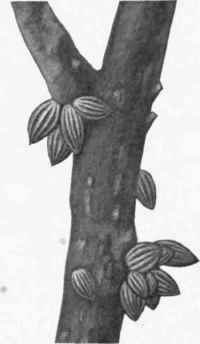
Fig. 16. Branch of tree with pods attached.
1 Courtesy of Walter Baker & Co., "Cocoa and Chocolate," page 14. 2 Courtesy of Walter Baker & Co., "Cocoa and Chocolate," page 13.

Fig. 17. Pods and leaves.
Continue to:


My Books

