


1410. - To Poach Eggs
Description
This section is from the book "The New Cyclopaedia of Domestic Economy, and Practical Housekeeper", by Elizabeth Fries Ellet. Also available from Amazon: The New Cyclopaedia of Domestic Economy, and Practical Housekeeper.
1410. - To Poach Eggs
Is to boil them without their shells, and requires still greater care. The water must be perfectly pure, and the yolk must be only just so much done as to fix itself firmly in the centre of the white.
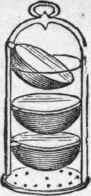
Egg Poacher.
Put a moderate quantity of water into a broad flat stewpan. French cooks add to it, when boiling, a spoonful of vinegar and a little salt. Take the pan off the fire whilst putting in the eggs; break the egg into a teacup or small ladle, and turn it gently into the water, so as to prevent the yolk from being mixed with the white; let them stand till beginning to set; then let the eggs boil gently until you perceive that they are done, by the white being set, and the yolk appearing through it in a comparatively soft state; then take each from the water with an egg-slice, and pare off any ragged edges, which may appear around it, before sending to table. This latter operation, however, if not quickly done, cools the egg, which ought to be served quite hot, to avoid which inconvenience, a little machine for poaching has been invented.
Poached eggs are commonly placed upon buttered toast, broiled ham, or boiled spinach.
Continue to:


My Books

