


Classification Of Poisons
Description
This section is from the book "Warne's Model Housekeeper", by Ross Murray. See also: Larousse Gastronomique.
Classification Of Poisons
The poisons most commonly met with may be divided into three classes - viz., animal, vegetable, and mineral; of these the two latter ar more numerous, or at all events more commonly met with than the former.
Animal Poisons
In the first class is poisoning from certain shellfish, such as mussels, lobsters, etc., the eating of which is sometimes followed by an eruption of nettle-rash over the whole body, which causes it to have a bloated swollen appearance, and produces difficulty of breathing, accompanied with giddiness, nausea, stomachache, and great thirst.
Treatment
If commenced within two or three hours after the appearance of the symptoms, an emetic of mustard, salt, and warm water, should be given. The emetic should be compounded thus: -
Mustard, I teaspoonful.
Common salt, I teaspoonful.
Warm water, a tumblerful. Mix, and take as a draught.
Should, however, a longer time have elapsed, purgatives, such as a tablespoonful of castor oil, or half an ounce of Epsom salts, should be administered and repeated until full action is obtained. Stimulants, such as salvolatile, or aromatic spirits of ammonia, and ether, may also be administered if there be much depression.
The following form would be a useful draught: - Take of Nitrous spirits of ether, 30 minims.
Spirits of salvolatile, 30 minims.
Water, to make up 1 1/2 ounces. Repeat the dose every two or three hours until the system rallies.
Vegetable Poisons
Of these the most commonly met with are the aconite or monkshood, belladonna or deadly nightshade; the hellebore, hemlock, henbane, foxglove, laburnum, yew, colchicum or meadow saffron, and mushrooms, all of which are indigenous to this country. Others, such as opium, Indian hemp, nux vomica, and gamboge, are not native here.
Among vegetable poisons should be included oxalic acid, and that most deadly of all poisons, prussic acid, which is found in undiluted "almond flavouring" used for culinary pur-Doses.
Symptoms
Vegetable poisons have many features in common, thus they are strongly acrid and narcotic, or depressing; causing drowsiness, feebleness of pulse, vomiting, purging, and griping.
Under the following enumeration, the symptoms peculiar to each will be found, together with their appropriate treatment.
In order to assist the reader in the detection of vegetable poisons, we have appended a plate giving representations of some of the poisonous plants most commonly met with in temperate climates, and which are most likely to be mistaken for harmless plants by children and others.
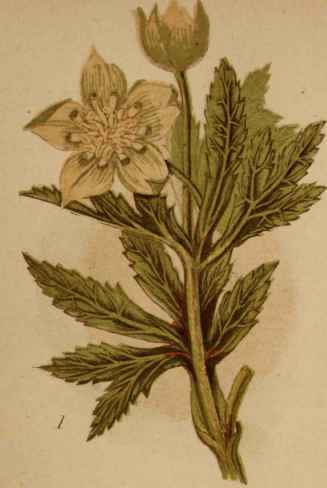
1. Green Hellebore.
Helleborus viridis.
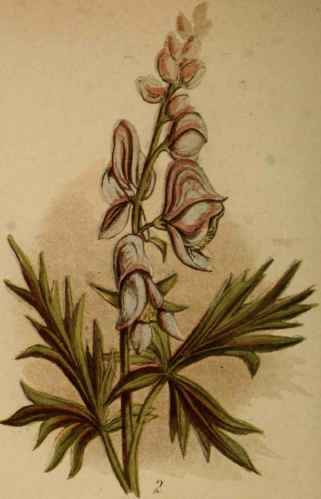
2. Monk's Hood.
Acomtum Napellus.
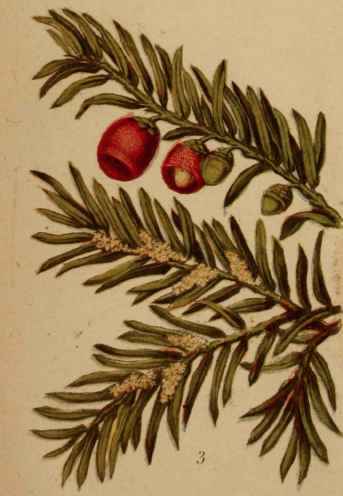
3. Yew.
Taxus baccala.
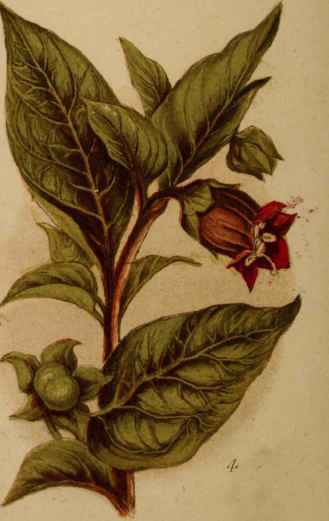
4.Deadly Nightshade.
Alropa Belladonna.
Continue to:


My Books

