


Plum Pudding
Description
This section is from the book "Choice Dishes At Small Cost", by A. G. Payne. See also: Larousse Gastronomique.
Plum Pudding
There is almost an infinite variety of receipts for plum puddings, but a very good general idea can be gathered from the following receipt; and the variations necessary to raise its level to a Christmas pudding on the one hand, or to bring it down till it is suitable for a boys' school on the other, can be pointed out afterwards.
Take half a pound of flour, a quarter of a pound of suet, a quarter of a pound of raisins, a quarter of a pound of currants, one egg, a tablespoonful of sugar, one-third of a nutmeg grated, half an ounce of chopped candied-peel, a pinch of salt, a dessertspoonful of treacle, and a little milk or water. A teaspoonful of baking powder will help to make the pudding lighter. First, stone the raisins, and pick the currants free from stalks, (etc. Chop the suet and the candied-peel very fine. (See No. 16.) Mix all the dry ingredients in a basin. Next, dissolve the treacle in a little milk or water. Break the egg into a cup, first beat it up, add it to the dry pudding, and moisten with the treacly milk or water, till you can almost pour the mixture. Next, take a pudding-cloth, flour it thoroughly, tie the pudding up tight, leaving room for it to swell. Boil for three hours. (See No. 24.) Turn it out on to a dish, and serve with sweet sauce. (See Sweet Sauce).
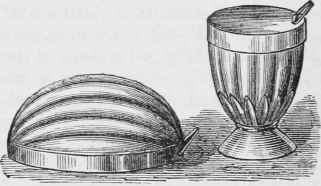
PUDDING MOULDS.
To render this pudding more rich, the quantity of the fruit (especially the raisins, which should be in excess of the currants) can be increased, also two or three eggs can be used instead of one. In this case the treacle will not be necessary, as the fruit helps to make the pudding dark.
To render this pudding less rich, omit the egg and decrease the quantity of fruit. Plum puddings can be varied in flavour by the addition of chopped lemon-peel, chopped apples, spices of various kinds, pounded almonds. When required very rich, bread crumbs can be substituted for flour, and brandy added. Plum puddings can be boiled in a mould or basin, but are always best when boiled in a cloth, and room allowed for their swelling.
Continue to:


My Books

