


Salmi Of Partridge
Description
This section is from the book "Choice Dishes At Small Cost", by A. G. Payne. See also: Larousse Gastronomique.
Salmi Of Partridge
Cut up the remains of some cold partridges into joints. Put the back, or backs, which contain but little meat, to boil for some time in some gravy, breaking them up first as much as possible. Strain off the bones, and rub the gravy through a wire sieve (see No. 21), rubbing all the pieces of meat and inside of the bird through with it. Warm up the remains of the bird in this gravy, but do not let it boil. Add a dessertspoonful of sherry to every half pint of gravy. Serve a little fried bread, and to each half pint of gravy six stoned olives, the last of all. A very little grated nutmeg may be added to the gravy. Avoid too much brown thickening whenever you have gravy for game.
Roast Partridges
Let the partridges hang as long as possible, or the flesh will be hard and flavourless. In cool weather, they should be kept fully a fortnight before they are put down to the fire. They may be trussed either with or without the head, though the latter mode is at present more generally preferred. Pluck, singe, and draw the birds, and wipe them carefully inside and out; cut off the heads, and leave enough skin on the neck to skewer them securely. Draw the legs close to the breast, pass the trussing-needle and string through the pinions and the middle joints of the thighs, and tie and skewer the legs. If the heads are left on, they should be brought round, and turned under the wing, with the bill laid on the breast. To give the birds a plump appearance, pass the needle through the back, below the thighs, then again through the body and legs, and tie the strings firmly. Put the birds clown before a clear fire, baste liberally with butter or dripping. The birds may be dished upon a slice of buttered toast, which has been soaked in the gravy in the pan under the birds, or they may be put on a hot dish, and garnished with water-cresses. Brown gravy and bread sauce should be sent to table with them; two or three thin slices of fat bacon, tied round the birds before they are put down to the fire, is thought by some to improve their flavour. The usual fault with partridges is that they are too often overcooked. Young birds roasted in a brisk oven do not want more than twenty minutes, and twenty-five minutes to roast before a good fire. Cook should be ordered not to commence to cook partridges until she sees the dirty soup-plates: supposing the dinner to consist of soup, joint, and partridge. They should be served directly they are cooked.
How To Carve Roast Partridges
The partridge is cut up in the same way as a fowl. (See Fowl, Roast, To Carve.) The prime parts of a partridge are the wings, breast, and merrythought.
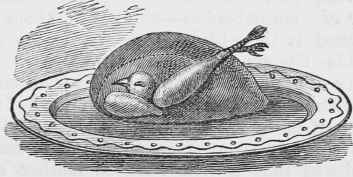
PARTRIDGE.
When the bird is small, the two latter are not often divided. The wing is considered the best, and the tip of it considered the most delicate morsel of the whole. " Partridges," says Dr Kitchener, " are cleaned and trussed in the same manner as a pheasant, but the ridiculous custom of tucking the legs into each other makes them very troublesome to carve. In connection with the subject of carving, it cannot be too often repeated, that more information will be gained by observing those who carve well, and by a little practice, than by any written directions whatever".
Continue to:


My Books

