


Recipes For Delmonico Sirloin Steak (Bifteck De Contrefilet Del-Monico)
Description
This section is from the book "The Epicurean", by Charles Ranhofer. Also available from Amazon: The Epicurean, a Complete Treatise of Analytical and Practical Studies on the Culinary Art.
Recipes For Delmonico Sirloin Steak (Bifteck De Contrefilet Del-Monico)
(1375). Delmonico Sirloin Steak Of Twenty Ounces, Plain (Bifteck De Contrefilet Del- Monico De Vingt Onces, Nature)
Cut from a sirloin slices two inches in thickness; beat them to flatten them to an inch and a half thick, trim nicely; they should now weigh twenty ounces each; salt them on both sides, basic them over with oil or melted butter, and broil them on a moderate tire for fourteen minutes if desired very rare; eighteen to be done properly, and twenty-two to be well done. Set them on a hot dish with a little clear gravy (No. 404) or maitre d'hotel butter (No. 581).
(1376). Delmonico Sirloin Steak A La Perigueux (Bifteck De Contrefilet Delmonico A La Perigueux)
After cooking the steak the same as for plain (No. 1375), lay it over a Perigueux sauce (No. 517), into which mix the third of its quantity of small chicken quenelles, forced through a cornet to three-eighths of an inch in diameter, glazing it with meat glaze.
(1377). Delmonico Sirloin Steak, Spanish Style (Bifteck De Contrefilet Delmonico A L'Espagnole)
Prepare and cook the sirloin steak as described for plain (No. 1375). Chop up separately a quarter of a pound of lean beef free sinews, and the same quantity of fresh pork. Mix these together with a tablespoouful of cooked fine herbs (No. 385), and one egg-yolk; season with salt, pepper, and nutmeg, then divide the preparation into four parts; roll it on a floured table into balls, flatten them to half an inch thick, then dip them in beaten eggs, and roll them in bread-crumbs; smooth this with the blade of a knife; plunge them into very hot fat for two minutes to brown the outsides. Drain and lay them one beside the other in a sautoir moistening them to their height with half-glaze sauce (No. 413), and let simmer for three-quarters of an hour, basting them frequently. Brown in oil four ounces of minced onions, add to it four ounces of finely minced green peppers, one clove of garlic, half a pound of peeled tomatoes cut in four and pressed; let cook together and reduce with a little brown sauce (No. 414) and gravy (No. 404). Lay the garnishing on the bottom of a dish, the glazed steak on top, and the hash balls over, one overlapping the other.
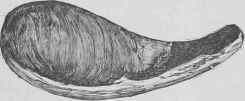
Fig. 311.
Continue to:


My Books

