


Recipes For Small Sirloin Steak (Bifteck De Contrefilet)
Description
This section is from the book "The Epicurean", by Charles Ranhofer. Also available from Amazon: The Epicurean, a Complete Treatise of Analytical and Practical Studies on the Culinary Art.
Recipes For Small Sirloin Steak (Bifteck De Contrefilet)
(1368). Small Sirloin Steak Of Twelve Ounces, Plain (Bifteck De Contrefilet De Douze Onces, Nature)
Cut slices an inch and a quarter thick from a sirloin; beat them to flatten them down to one inch, trim nicely, after which they should weigh twelve ounces; salt on both sides, spread them over with oil or melted butter, and broil them on a steady fire; it will take about eight minutes to have them very rare, ten to have them properly done, and twelve if desired well done; set them on a hot dish with a little clear gravy (No. 404) or maitre-d'hotel butter (No. 581).
(1369). Small Sirloin Steak A La Bearnaise (Bifteck De Contrefilet A La Bearnaise)
Prepare and cook the beefsteak as for the plain (No. 13(58); apart from the cooking described by minutes in that number, the time for broiling depends entirely upon the thickness of the meat, and the intensity of the fire. In order to judge whether the meat be done to the touch when it offers a certain resistance; this can easily be learned after once being accustomed to broiling. Dress the beefsteak over a Bearnaise sauce (No. 433); glaze the top with meat glaze (No. 402) using a brush for the purpose.
(1370). Small Sirloin Steak A La Bordelaise (Bifteck De Contrefilet A La Bordelaise)
When the beefsteak has been cooked as described in the plain (No. 1368) lay it on a dish and cover with Bordelaise sauce (No. 436).
(1371). Small Sirloin Steak A La Bordelaise With Marrow (Bifteck De Contrefilet A La Bordelaise Et A La Moelle)
Cook a small sirloin steak as for No. 1368, then arrange it on a very hot dish and cover with: sauce prepared as follows: Cut four ounces of beef marrow into quarter-inch thick slices, plunge them into boiling water, then drain. Dress them on the steak and cover with a Bordelaise sauce (No. 436).
(1372). Small Sirloin Steak A La Bordelaise With Marrow And Truffles (Bifteck De Contrefilet A La Bordelaise A La Moelle Et Aux Truffes)
After cooking the steak the same as a plain one (No. 1368) lay it on a very hot dish and cover with the following sauce: Cut three ounces of marrow into quarter inch thick slices, and one ounce of truffles in thin slices. Parboil the marrow and drain it off; heat the truffles in a little Madeira and half-glaze (No. 400). Over the steak arrange the marrow and truffles one intercalated with the other; cover with Bordolaise sauce (No. 436) and serve.
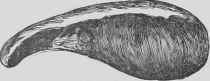
Fig. 310.
(1373). Small Sirloin Steak, Ancient Style (Bifteck De Contrefilet A L'Ancienne)
After the sirloin is cooked as in the plain (No. 1368) lay it on a dish, besprinkling it over with some anchovy butter (No. 569). Form on top a crown of anchovy fillets garnishing the interior with capers, and set round the steak a garnishing of potato halls, each an inch in diameter, fried three quarters in hot fat, and finishing cooking in the oven with some butter; when done drain off the butter, and season with salt, chopped parsley and lemon juice.
(1374). Small Sirloin Steak, With Butter And Cooked Fine Herbs (Bifteck De Contrefilet Au Beurre Aux Et Fine Herbes Cuites)
After the beefsteak is cooked as explained in plain (No. 1368) dish it up and cover the top with a layer of butter and cooked fine herbs (No. 385). Garnish around with fresh green water-cresses, seasoning it with salt and vinegar.
(1378). Sirloin Steak For Gourmets; Extra Forty Ounces (Bifteck De Contrefilet Des Gourmets; Extra Quarante Onces)
Cut from a good thick sirloin of beef, slices, each one being four to five inches thick; beat to flatten them down to three inches, then trim them carefully, salt them on both sides, cover with either clarified butter or melted marrow, and place in a double gridiron and broil them over a moderate tire for twenty minutes if desired rare, twenty-six minutes to have them properly done, and thirty minutes when needed to be well done. Lay them on top of a gravy prepared as follows: Have two tablespoonfuls of finely chopped shallot, fry it colorless in three ounces of butter, add some melted glaze (No. 402), stir in four ounces of fine butter, a teaspoonful of the best tarragon vinegar, chopped parsley, a dash of cayenne pepper, and two ounces of beef marrow cut into half inch squares. When the marrow is warm, pour it on the dish, lay the extra size steak on top. glaze it with meat glaze (No. 402), and garnish around with gastronome potatoes (No. 2789).
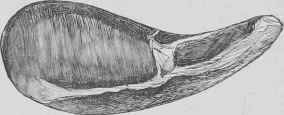
Fig. 312.
(1379). Tenderloin Of Beef. How To Prepare (Pour Preparer Le Filet De Boeuf)
The tenderloin is found in the inside of the short loin in the hollow formed under the spinal bone. Detach the tenderloin from the spinal bone of a middle short loin by following the bone with the knife; then displace it from the flat bone and from the spinal bone, scraping it off so that no meat remains on the bones. Remove the fat and large nerves and with a thin knife remove the hard skin covering the tenderloin. It is to be served whole or else cut up. Use the middle slices for Chateaubriands; for ten ounce tenderloin steaks use on each side of the Chateaubriand, for mignons, noisettes and tournedos the thin end and the other end for greuadius; the head part is also used for mincing, for Salisbury steaks, Hamburg steaks, etc.
Continue to:


My Books

