


Sautoir, Saucepan, Soup Pot, Braziere (Sautoir, Casserole, Marmite, Braisiere)
Description
This section is from the book "The Epicurean", by Charles Ranhofer. Also available from Amazon: The Epicurean, a Complete Treatise of Analytical and Practical Studies on the Culinary Art.
Sautoir, Saucepan, Soup Pot, Braziere (Sautoir, Casserole, Marmite, Braisiere)
Fig. 130 represents a flat, thick copper saucepan, generally called a sautoir; they are also made of a thinner copper and are intended for sauteing fillets of chickens, escalops, cutlets, etc. It is necessary to have these of all sizes, large as well as small.
Fig. 131 represents a copper saucepan tinned in the interior and furnished with a cover fitting inwardly. These also must be of all sizes according to the importance of the work to be executed.'
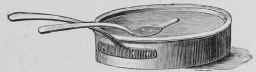
Fig. 130.

Fig, 181.
Fig. 132 represents a glazing saucepan; the edges of this one are only half as high as the ordinary saucepan; it is covered with a hollow cover fitting outside the pan; this is for the purpose of holding red hot coals or ember so to glaze and color the meats.

Fig. 132.

Fig. 133.

Fig. 134.
Fig. 133 represents a soup pot for broths with side handles, with or without a faucet, serving to draw off the Liquid. Copper pots are preferable to iron or earthen ones, the first give the broth or soup a dark color and the latter in time acquire a bad taste.
Fig. 134 represents a braiziere or long stew pan having rounded ends and handles. Its deep cover is made to hold hot embers, but this is not necessary if the braizing is done in the oven, then a well fitting cover will be found sufficient.
Continue to:


My Books

