


Cuts of Beef
Description
This section is from the book "Mrs. Fryer's Loose-Leaf Cook Book", by Jane Eayre Fryer. Also available from Amazon: Mrs. Fryer's Loose-Leaf Cook Book.
Cuts of Beef
The time required for digestion of beef and mutton is about the same. Pork is the most difficult of meats to digest, and is better for the use of people who do manual labor than for those who exercise little. The flesh of young animals is tender, but is less nutritious than that of older ones. Beef and mutton are found in the markets the year round. Veal and lamb are in season in the spring. Pork should not be used in hot weather.

1. | Neck |
2. | Chuck |
8. | Ribs |
4. | Shoulder clod |
5 | Fore shank |
6 | Brisket |
7. | Cross ribs |
8 | Plate |
9 | Navel |
10 | Loin |
11 | Flank |
12. | Hump |
13 | Round |
14 | Second cut round |
15 | Hind shank |
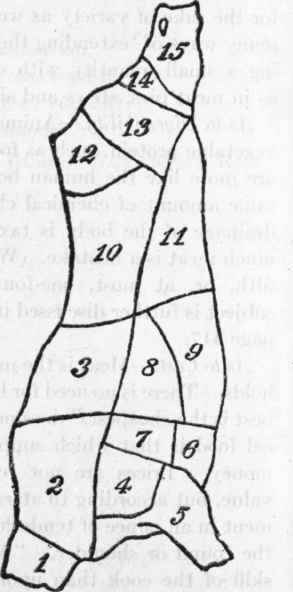
Diagram of Cuts of Beef.
The methods of cutting meats differ in different localities, but the diagrams in this chapter give the housekeeper an idea of the general divisions. As a rule, the more tender portions of unused muscles lie just below the back of the animal, but the tenderness decreases downward, toward the legs, and toward the head.
Never wash fresh meat. Wipe it with a damp cloth.
Continue to:


My Books

