


Trussing Poultry And Birds For Roasting
Description
This section is from the book "Practical Cooking And Serving", by Janet McKenzie Hill. Also available from Amazon: Practical Cooking and Serving: A Complete Manual of How to Select, Prepare, and Serve Food [1919].
Trussing Poultry And Birds For Roasting
Steel skewers are quite generally used for trussing, but in most cases it is quite as easy and preferable to use the trussing needle, which is similar to a long, large, packing needle, except that it has a three-sided point. Turn the wings in, so that the three joints of each will form triangles on the back of the fowl, the tips being pushed over the first joint and meeting on the skin of the neck where it was turned over the back. Thread the trussing needle with white cotton twine; press it through the middle joint of the wing, then over the first joint, taking up a stitch through the skin of the neck, folded over, and the back, then out through the second joint of the second wing. The needle may now be returned in the same way to the first side and tied there, or it may be returned through the thighs and body at the bend of the thigh joint. Now press the legs down and close to the body; push the needle through the leg and body to the other side, return through the flesh and body, or over the backbone and through the flesh of the second leg; draw tightly and tie. When sending the needle back to the first side, both at the side of the wing and the leg, make a stitch nearly three eighths of an inch in length; when the bird is roasted, cut this stitch and then draw out the threads by the knots made in tying. Truss small birds in the same fashion, the feet and legs, nicely cleaned, may be retained and in trussing are left standing in an upright position.
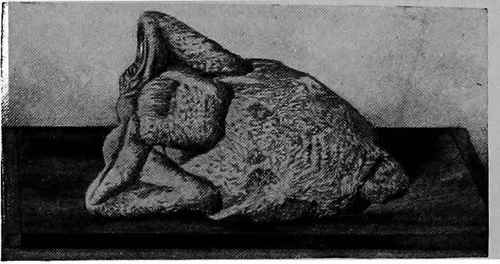
Back Of Chicken Trussed For Roasting
Continue to:


My Books

