


How To Broil Beefsteak
Description
This section is from the book "The Pure Food Cook Book: The Good Housekeeping Recipes, Just How To Buy, Just How To Cook", by Harvey W. Wiley. Also available from Amazon: The Pure Food Cookbook.
How To Broil Beefsteak
BROILING is but a method of roasting applied to thin pieces of meat. That is, in broiling or grilling, the steak or chop is exposed to the direct rays of the fire, whether it be coal, gas, or electricity.
A perfect steak should be cut one and one-half inches thick and cooked quickly over a hot fire, so that both sides are browned, the interior being of an even red color. The steak should be puffed and elastic from the confined steam of the juices, and every particle of juice and flavor should be preserved, not lost in the cooking.
To do this, first remove the superfluous fat from the meat; heat the broiler and grease it well with a piece of this fat. Lay the steak on the broiler with the skin or outside edge toward the handle. This is done because as the broiler is turned it is tipped down, therefore the melting fat runs on to the meat instead of into the fire, if the steak is placed right. The coals should be red and hot, not black nor burned white. Put the broiler close to the coals and count ten slowly. Turn and count again. In this time, if the fire is right and the steak can be sufficiently near, the surface will be seared over so the juices will be retained.
Repeat this, however, then hold the broiler further away from the coals or fire, that the steak may cook more slowly. If the meat is broiled too near the fire all the time of cooking, the outside will be overdone, the inside underdone. If it be held too far away from the fire all the time it will lose its juices and be flat, and lacking in flavor.
When broiling steak one cannot, or should not, try to attend to other things. It requires constant attention; for the steak should be turned every ten seconds, for a period of eight to ten minutes, according to the thickness of the steak.
When the fat runs into the fire no special harm is done, unless the steak is permitted to absorb the smoke, when it occasionally gets a smoky taste. The flame will not hurt it, the smoke may. When properly done, little or no fat or juices will run into the fire. When cooked it will be just the right brown, and this look one learns only by experience. Moreover it will be puffed up between the wires of the broiler and will offer a slight resistance to the touch. If in doubt remove the broiler to a dish on a table and make a clean cut on one side with a sharp knife. Do not before, after, or during cooking, pierce the steak with a fork, but learn to judge by time and appearance as to the condition of the meat.
If the steak is preferred well done the process is more difficult, but after the first quick searing over, which must be done as rapidly as possible, remove the steak farther from the heat and cook for a long period. It is even more necessary to turn it frequently when desired well done than when cooked rare, if one wishes a perfectly broiled steak. Cook for twelve or thirteen minutes if wanted well done when the steak is an inch and a half thick. A thin steak requires careful handling, but can be cooked relatively more quickly than a thicker one, when desired well done. A steak two inches thick will take from fifteen to eighteen minutes to broil rare, and needs constant attention.
While broiling over a coal fire the flue dampers should be open, to carry flame and odors up the chimney.
Do not let the steak stand before serving if it can be avoided. Dredge with salt and pepper after, not before, cooking, and when ready to serve spread with butter and garnish with parsley.
Pan-broiling means to broil in a hot pan in place of over the coals. It should not be confused with frying, sauteing, or any such method. The hot pan should be rubbed with a piece of fat just as the broiler is greased to keep the steak from sticking, and the steak broiled in it precisely as described for broiling over the coals. The pan should be very hot at first, the steak seared on both sides, then allowed to cook more slowly, but turned every ten counts as carefully as if over the coals. In lifting to turn it put the fork in the extreme end of the steak, if a fork must be used. Any fat that runs out of the steak in cooking should be poured off in order to prevent the fried look or taste that will result if the meat is sauted in its own fat.
Beef Loins of First, Second, and Third Grades. Sirloin Steaks are Cut from the Surface Shown. Note the Differences in Shape, Thickness, Outside Fat, Marbling, Grain, and Quality of Meat.

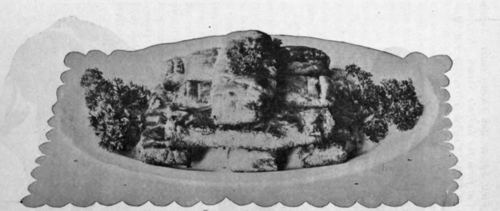
Sausage Bundle's. Recipe on Page 228.
Continue to:


My Books

