


Beef
Description
This section is from the book "A Textbook Of Domestic Science", by Matilda G. Campbell. Also available from Amazon: A textbook of domestic science for high schools.
Beef
The best beef is obtained from steers, four to six years old, which are raised in the West and shipped alive to Chicago or some other packing center. After slaughtering, the animal is dressed and divided into quarters, which are placed at once in cold storage in order that they may cool quickly, for this improves their quality. From the cold storage rooms the beef is shipped in refrigerator cars to different parts of the country. Beef should hang from two to four weeks that it may become tender, but is often kept a much longer time without deterioration.
Diagram Showing Bones and the Various Market Cuts (Williams and Fisher)

Names Of Cuts Food Uses
1. Sirloin.
2. Porterhouse.
3. Rump.
4. Round.
5. Top sirloin.
6. First prime ribs.
7. Second cut ribs.
8. Chuck ribs.
9. Neck.
10. Brisket.
11. Cross rib.
12. Plate.
13. Navel.
14. Flank.
15. Shoulder.
16. Shin.
Steaks
(a) Hip bone sirloin, best sirloin steak.
(b) Flat bone sirloin, second best sirloin,
(c) Round bone sirloin, poorest sirloin. Steaks.
(d) Club steak. (e) Tenderloin.
Corning
(f) Best corning piece. Steaks and made dishes. Pot roast and steaks. Best roasts. Roasts.
Poorer roasts and steaks. Beef tea, stews, or boiling. Corning. Pot roast. Corning. Corning. Stews or boiling. Soup. Soup.
Points To Note In Judging Beef
1. It should be a bright red color after it has been cut a short time.
2. It should be well marbled with yellowish fat.
3. It should have a thick layer of fat overlying the muscles.
4. It should be firm to the touch.
5. It should be free from disagreeable odor.
Market Cuts Of Beef
Photographs used by permission of Teachers College, Columbia University

First cut Prime Ribs
Second cut Prime Ribs
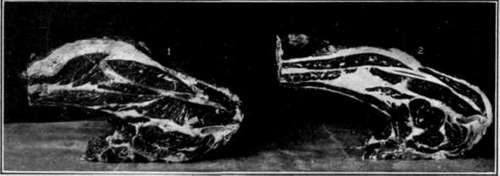
Chuck Ribs
Blade Ribs

Porterhouse Steak
Small Porterhouse and Club Steak

Flat-bone Sirloin
Hip Sirloin

1. Chuck Steak G
2. Skirt Steak
3. Flank Steak

Round bone Sirloin
Continue to:


My Books

