


The Japanese Oranges
Description
This section is from the book "The American Garden Vol. XI", by L. H. Bailey. Also available from Amazon: American Horticultural Society A to Z Encyclopedia of Garden Plants.
The Japanese Oranges
It begins to look as if Japan, having sent to America the great flame-colored kaki, or oriental persimmon, a beautiful group of plums, the loquat, and many other fruits of value, was about to add, in a number of citrus fruits, the most important acquisition of recent years. Why this is so, I shall endeavor to show in the course of this brief article. The Japanese Agricultural Society describes and figures some thirty varieties of oranges and other citrus fruits, besides the wild stock (Citrus trifoliata), which is used to dwarf the standard varieties. Many of these varieties are of little commercial value, but others promise to be more hardy, and hence adapted to a larger portion of the United States than are any other class of citrus fruits. Further, the possibilities of dwarfed orange trees for culture in plant houses and conservatories may greatly develop. Lastly, the unique "cumquot" orange {Citrus Japonica), offers a new field for scientific horticulture, as it may prove the progenitor of a new class of fruits, and even in its present type form possesses much value.
I have lately sent to Mr. Shosuki Sato, of the Sapporo Agricultural College, Japan, for additional information upon the best oranges grown there, methods of culture and illustrations, which will, I hope, throw more light upon the subject. At present, aside from my own experience in the importation and culture of some Japanese orange trees a few years ago, I have chiefly depended upon the observations of Mrs. H. H. Berger, made during two visits to Japan, and a pamphlet of Mr. B. M. Lelong, Secretary of the State Board of Horticulture, upon citrus culture in California. Mr. H. £. Amoore has also been in Japan, and his reports agree in the main with my other sources of information. I have, of course, followed my own estimate of the value of such varieties as I have seen in fruit.
Broadly speaking, the Japanese citrus fruits consist of small, highly-flavored, sweet oranges of the Mandarin or "kid-glove" class ; large, light-colored oranges and many sorts of sour oranges, much liked by the Japanese; a class of oranges of curious and remarkable shapes or colors, the result of the same gardening taste that dwarfs pines and oaks; and lastly the famous round or oval "cumquots," or "kincquats," which are oranges not larger than a cherry or English gooseberry, growing on small bushes. The wild Citrus trifoliata to which I have alluded, is deciduous. Otherwise it appears like an ordinary orange, except that its large leaves are trifoliate, and its thorny defenses are far superior to any other tree of the citrus family. The fruit is about an inch through, light yellow in color and nearly filled with seeds. It is an exceedingly ornamental shrub, and is much hardier than the common orange.
Of the Mandarin class, one of the leading sorts is the Satsuma or Oonshiu. The fruit is about three inches in diameter, flattened, rind very soft and easily taken off, fine texture, smooth, flesh very sweet, and nearly or quite seedless. Ripens about the middle of November and keeps well. The tree naturally grows in a bushy form, the favorite plan in Japan being to grow them like a low-headed quince, so that all the fruit can be gathered from the ground. This variety was first imported years ago, on dwarf stocks, by my father, James Shinn.
After eight or ten years' experience with dwarf trees in sixteen-inch tubs, where they blossomed and bore good crops, we planted most of them in the open ground, and also grafted some in the tops of large Los Angeles seedling trees. They all throve, and bear heavy crops every year. Trees of this variety are said to endure cold of sixteen degrees Fahr. without injury, and the Japanese certainly grow them in districts where the ordinary orange cannot be made to succeed.
Mr. Lelong considers the small, high-colored Japanese orange grown at San Gabriel by the Chap-mans one of the best varieties known in California. The orange box in which this sort is shipped is twelve by five by sixteen inches, and holds from one hundred and twenty-five to one hundred and fifty oranges. This is probably the Kawachi, an excellent variety of the Mandarin type. It makes a larger tree than the Oonshiu.
Most of the leading varieties, as described by the Japanese Agricultural Society, have been introduced into California, but the labels of early importations were badly mixed, and it will be some time before the matter can be straightened out. The follow-i n g are worth mention :
Kino-ku-ni, fruit two and a half inches in diameter, orange yellow, sweet.
Koji, fine tree for dwarfing and pots. The bud and flower "are used as spice in Japan," and the pale yellow fruit is of fair quality.
FIG 4. Sakura-jima.
Dai-dai, a bitter orange, used for preserves and marmalade. The fruit will remain on the tree for several years. A hardy, large tree, much used for avenues.
Natsu-dai-dai, the curious "summer orange," a very large, bright fruit, which is not eaten until the second summer, when it is fit for the table. Resembles a pomelo.
Kunembo, deep orange rind and very fragrant; sweet pulp. Mandarin class.
Yamabuki, large, pale-colored, greenish, conical-shaped fruit; coarse, sub-acid, a long keeper.
Sakura-jima, coarse in quality, small, roundish oblate, dwarf growth.
Shiriwa-koji, thin yellow rind, sweet solid pulp, good quality. .
Beni-koji, very red and thin rind, sub-acid pulp, slightly bitter.
Luko, a hardy tree. Fruit yellow, thick rind, sweet when ripe.
Toko-Iudzo, small, round, pale yellow rough-skinned fruit. Tree a very heavy bearer.
Yagatara, very large fruit, thick rind, sub-acid, juicy. A pomelo with white flesh.
Maru-bushiukan, large citron-like fruit, almost all rind ; used in confectionery.
Bushiukan, large, solid fruit, with little pulp, and that bitter. Fruit terminates in five large fringelike lobes. Used for perfumery and for ornamental pot-culture.
Among the other varieties are those with the names Kinugawa, To, To-dai-dai, Beni, Naruto, Kabusu and Ama-dai-dai, curiosities of the citrus family, most of them, and usually dismissed with the remark: '• not desirable." The best eating oranges which have yet come from Japan are the Oonshiu, the Kawachi and the Kino-kuni. These are in all respects first-class, and fill a new place in American horticulture.
The Oonshiu has been decided by Professor Van Deman to be identical with the Satsuma, and is grown as such in Florida. Mr. Amoore tells me that this variety is cultivated almost exclusively in the province of Kishiu, and is known as Unshiu (pronounced Oonshiu) there and in Satsuma. Trees came to us in California eighteen years ago, under the name Unshiu, which thus seems to have prior claims.
An interesting article from Professor C. C. George-son, of the Tokio Agricultural College, was published in 1888, in which he said: "Japanese oranges are in many respects different from those grown in the United States. Most of the Japanese varieties belong in fact to an entirely different species, the Citrus nobilis of botanists, otherwise known as the Mandarin orange, while the American and European oranges belong to C. aurantium. The Mandarin type is well represented in the orange. It is the queen of oranges in J needs only to be known to be appreciated ica. It may be described as follows: Fru to large, oblate and flat, or even slightly at apex and base, and at the latter place few broad, shallow folds. Rind very 1 rating easily from the pulp, smooth with tre, and orange or reddish orange in cc pulp is divided into eleven or twelve section; which separate easily from each other tion is enclosed in a thin membrane, which does not adhere to the pulp except on the outer or spherical side. The pulp is very juicy, seedless, sweet, but with the faintest trace of acid when fully ripe, delicious, all dissolving on the tongue, leaving little or no fibrous residue".
The claim of hardiness for the Japanese oranges is well sustained. I have seen letters from persons in Louisiana, Mississippi, Florida, Georgia and California alluding to this as the most valuable point in this class of oranges. One man says : "Frost and ice every night for a week. Two Navel orange trees packed and in the railroad depot building were frozen, but the Japanese orange trees in the open ground were uninjured." A Florida grower says that they stand eighteen degrees of frost without shedding the leaves. J. W. Moore, of Jacksonville, Florida, wrote, in 1885, that buds stood when large sour stocks were killed down. At So-quel, Japanese oranges stood fifteen and a half degrees without injury, and at Kelseyville the thermometer fell to twelve degrees without hurting them. The claim has been made that they will stand from twenty to twenty-four degrees of frost, but this remains to be proved.
Leaving the Japanese oranges of the Citrus nobilis species, I turn to the two varieties of the interesting Citrus Japonica, the cumquots, or "kincquats," which deserve especial mention. There are two sorts, the Marumi-kinkan and the Nagami-kinkan. The first has a deep yellow fruit from three-quarters to an inch in diameter. The second has an oblong and somewhat larger fruit. Both grow on bushes of from six to twelve feet high. The whole fruit, rind and all, is eaten, and people become very fond of them. Preserved in sugar, or crystallized, the cum-quot, wherever known, is exceedingly popular. The bushes in fruit and blossom are very handsome, and can be recommended for pot-culture. The Japanese graft cumquots and large oranges together on the same stalk, in the many attractive and curious combinations so dear to these ingenious gardeners.
I have already published several articles on the dwarfing of Japanese oranges, and the possibility that American horticulture can develop a new industry - that of pot-grown orange trees in full bearing, to be sold in that shape to the wealthy classes of such cities as Chicago and New York. The suggestion that a hardy, dwarfed Oonshiu (grafted on Citrus trifoliata stock) might serve admirably as a window plant, brought me eager letters from all parts of the country, showing how many persons would like to experiment with pot-grown oranges. I have not, of course, trees for sale, but I wrote to all of my correspondents who enclosed a stamp, giving them all the information obtainable here. The fact is, however, that dwarf pot-grown trees from Japan ought to be shipped to California, New York, or some other center, and there receive skilled care for a year or two before they are in condition to be offered to the public with any assurance of safety. Moreover, if well grown potted oranges are desired from Japan, careful arrangements must be made there. The Japanese nurserymen "grow to order" far more than we do, and it is often a matter of three or four years of hard work and correspondence for a California nurseryman to get his Japanese connection to send him anywhere near what he wants.
But I see no reason why a man who has a camellia house in New York should not, if he chooses, manage to secure well-grown Japanese dwarfed orange trees and establish his orangery. What improvements are possible, especially for the cumquot class, must be left for the future to determine; the outlook is surely bright enough to tempt cultivators.
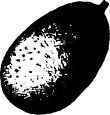
Fig. 8. Nagami- KINKAN.
California. Charles Howard Shinn.
Continue to:


My Books

