


Dryopteris
Description
This section is from the book "The Standard Cyclopedia Of Horticulture Vol2", by L. H. Bailey. See also: Western Garden Book: More than 8,000 Plants - The Right Plants for Your Climate - Tips from Western Garden Experts.
Dryopteris
(Greek, oak-fern). Polypodiaceae. Wood-Fern. A widely distributed genus of handsome ferns with dissected foliage, the native species sometimes grown in the hardy border and the tropical kinds under glass.
Plants bearing round sori either naked or covered with heart-shaped or reniform indusia, which are fixed at the center or along the sinus: veins either wholly free or the lowest united. - Several hundred species have been referred to this genus. A considerable number of our common woods ferns belong to this genus. The species have been variously known under the names Lastrea, Aspidium, and Nephrodium. Other species sometimes referred to under this genus may be found under Polyslichum and under Lastrea. For D. acrostichoides, see Polystichum; for D. decurrens, see
Teclaria. In N. Amer., known to many as Aspidium. For cult, see Ferns. Not the same as Doryopteris.
a. Veins entirely free. b. Pinnae lobed less than one-third to midrib.
1. Hirtipes, Kuntze (Nephrodium Hirtipes, Hook.)
Leaves rather rigid, 2-3 ft. long, 8-16 in. broad, on stalks clothed with dense black scales; pinnae with broad, blunt lobes, the lower ones not reduced in size: sori medial on the lobes. India.
bb. Pinnae cleft nearly to midrib, or leaves bipinnate or tripinnatifid.
c. Texture thin, membranous; veins simple or once forked.
D. Lower pinnae gradually reduced to mere lobes.
2. Noveboracensis, Gray (Aspidium Noveboracense, Swartz)
New York Fern. Lvs: somewhat clustered from creeping rootstocks, pale green, 1-2 ft. long, tapering both ways from the middle. Canada to N. C. and Ark.
3. Fischeri, Kuntze (Lastrea Opaca, Mett.)
Leaves 6-8 in. long, 2-3 in. wide, bipinnatifid, cut into close, entire lobes, the lowest much reduced; surfaces smooth. Brazil.
dd. Lower pinnae scarcely smaller than those above. e. Veins forked.
4. Thelypteris, Gray (Aspidium Thelypteris, Swartz)
Marsh Fern. Rootstock creeping: leaves scattered, clear green, 1-2 ft. long; margins of the spore-bearing pinnae often strongly convolute: sori 10-12 to each segment Canada to Fla. and Texas. - A form with pinnae variously forked at tip is known as Pufferae.
ee. Veins simple.
5. Simulata,Davenp
Rootstock creeping:leavesyellowish green, scattered, 8-20 in. long, 2-7 in. wide, with 12-20 pairs of lanceolate pinnae: sori rather large, somewhat distant, 4-10 to each segment Native in N. Y. and New England, where it may be confused with D. Thelypteris. G.F. 9:485.
6. Patens, Kuntze
Leaves clustered at the end of a thick rootstock, 2-3 ft. long, 4-10 in. wide, soft-hairy beneath; pinnae cut three-fourths to the midrib, the basal segments usually longer. Fla. to Texas and Calif, and tropical Amer. A.G. 20:25.
CC. Texture firm or subcoriaceous; veins 2-4 times forked.
D. Leaves bipinnatifid or nearly bipinnate: indusia large, mostly flat.
7. Cristata, Gray (Aspidium Cristatum, Swartz)
Leaves 1-2 ft. long, with short, triangular pinnae 2-3 in., long, are much wider at base. variety Clintoniana, Underw. (probably a distinct species), is larger, with pinnae 4-6 in. long, and with the sori rather near the midvein. Canada to Ark.; also in N. Eu. - Hybrids are described with D. marginalis and other species. G.F. 9:445.
8. Goldieana, Gray (Aspidium Goldieanum, Swartz)
Leaves growing in large crowns, 2-4 ft. long, 12-18 in. wide, the pinnae broadest at the middle: indusia very large. Canada to Ky. - One of our largest and most stately native species.
dd. Leaves mostly bipinnate: indusia convex, rather firm.
9. Filix-Mas, Schott (Aspidium Filix-Mds, Swartz)
Male Fern. Leaves growing in crowns, 1-3 ft. long: sori near the midvein. Used as a vermifuge, as is also the next species. Eu., Canada and Colo.
10. Marginalis, Gray (Aspidium Marginale, Swartz)
Fig. 1363. Leaves 6 in. to 2 ft. long, growing in crowns, mostly in rocky places: sori close to the margin. Canada and southward. - One of our commonest ferns, and gathered with D. spinulosa intermedia for use with cut-flowers
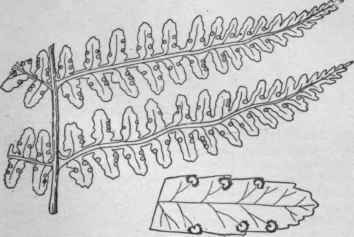
Fig. 1363. Dryopteris marginalis. (Detail X1)
ddd. Leaves mostly tripinnatifid; segments spinulose-toothed: indusia shriveling at maturity.
e. leaf - stalks naked, polished.
11. Viridescens, Kuntze
Leaves 18-24 in. long, on stalks two-thirds as long; lower pinnae largest: sori near the midribs. Japan.
ee. leaf - stalks scaly.
12. Spinulosa, Kuntze (Aspidium Spinulosum, Swartz)
Leaves ovate-lanceolate, with a few pale, deciduous scales at the base: indusia smooth, without marginal glands. variety intermedia, Underwood. Leaves evergreen, the scales more persistent, with brown centers, and the margins of the indusia with stalked glands. One of our commonest wood ferns in the northern states. Extensively gathered for use with cut-flowers Probably a distinct species. variety dilatata, Underwood, has similar scales to the last and tripinnate leaves In woods at altitudes of 1,500 ft. upward, from Canada to Ore.; also in Eu. Probably a distinct species.
13. Bodttii, Underwood (Aspidium Boottii, Tuckm.)
Leaves elongate-lanceolate, with broadly oblong pinnules: indusia minutely glandular. Intermediate between D. cristaia and D. intermedia. Probably a hybrid. Canada, N. Y. and New England.
dddd. Leaves ample, 4-5-pinnatifid.
14. Efifusa, Urban
Leaves 3-4 ft. long, 2 ft. or more wide, with polished stalks and from short, creeping rootstocks: sori abundant, scattered, often without indusia. Cuba to Brazil.
15. Dissecta, Kuntze (Lastrea Membranifolia, Hort.)
Leaves 1-5 ft. long, 1-3 ft. wide, membranous, decompound; segments broad and blunt; surfaces nearly naked: sori near the margin, abundant. India and Madagascar to Austral.
aa. Veins not entirely free, the lower veinlets of adjoining segments united.
16. Otaria, Kuntze (Lastrea Aristata, Hort.)
Leaves 1 ft. long, with a long terminal pinna an inch or more wide, with lanceolate lobes, and 6-12 similar lateral pinnae; texture thin; surfaces naked; veins united halfway from the midrib to the edge. Ceylon to the Philippines. - Good for table ferneries, but slow of growth.
17. Parasitica, Kuntze
(Nephrodium molle, R. Br. D. m6Uis, Underwood, in preceding edition). Fig. 1364. Leaves 1-2 ft. long, 8-12 in. wide, bipinnatifid, the pinnae cut into blunt lobes; lower pinnae distant from the others and somewhat shorter; surfaces finely villose. Tropical regions of both hemispheres. - Often grows as a weed in greenhouses.
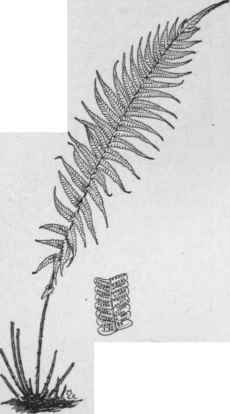
Fig. 1364. Dryopteris parasitica. (X1/6)
18. Basiliaris, C. Chr
(Nephrodium philippinense, Baker. D. philippinensis, Underwood, in Cyclo. Amer. Hort.). Leaves 2-3 ft. long, 12-18 in. wide, bipinnatifid, smooth, with a naked rachis; lower pinnae scarcely smaller: sori midway from midrib to margin, with firm, smooth indusia. Philippines.
19. Crenata, Presl
Leaves 1-2 ft. long, on stalks nearly as long, with a terminal pinnae 6-8 in. long, often 2 in. wide, and 4-8 similar lateral pinnae; margins bluntly lobed: sori near the main veins. Cuba and Mex. to Brazil. L. M. Underwood.
R. C. Benedict.†
Continue to:


My Books

