


Good And Bad Pruning
Description
This section is from "The Horticulturist, And Journal Of Rural Art And Rural Taste", by P. Barry, A. J. Downing, J. Jay Smith, Peter B. Mead, F. W. Woodward, Henry T. Williams. Also available from Amazon: Horticulturist and Journal of Rural Art and Rural Taste.
Good And Bad Pruning
The annexed wood-cute will explain the effects of judicious and injudicious pruning better than a lengthened disquisition. Fig. 1 represents a tree of thirty years' growth, which has been regularly and properly pruned. Fig. 2, a tree of the same age, which has been neglected as to pruning during its early growth, and has now been pruned in a way too frequently practised - namely, by sawing and lopping off the branches, after they have attained a large size. Fig. 3 shows the bad consequences of neglecting early pruning, in the case of a plank cut from an ash-tree which had been pruned by lopping off the large branches many years before it was felled. The cuts in this case had been made several inches from the bole, and the branches being very large, the stumps left had become rotten. The enlargement of the trunk had not, however, been stopped, for the new wood had covered over all the haggled parte, in some places to several inches thick. Yet the effects of the previous exposure to the action of the weather, by injudicious pruning, is strikingly marked by the decayed state of the parts connected with the branches which had been amputated; progressive pruning of deciduous trees, commenced while they are young, if it is to be practised at all, will produce no such blemishes when the timber is cut up.
In a school for gardeners, or indeed in every school, these effects should be demonstrated by examples of bad pruning; the best collection of such is to be found in the economic museum of Sir William Hooker's foundation at Kew Gardens, but it would be very easy to collect specimens for exhibition at horticultural societies and State or county fairs.
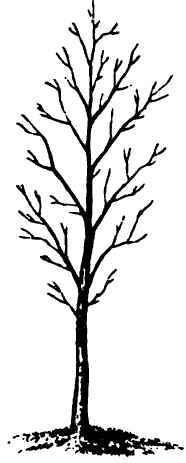
Fig. 1.
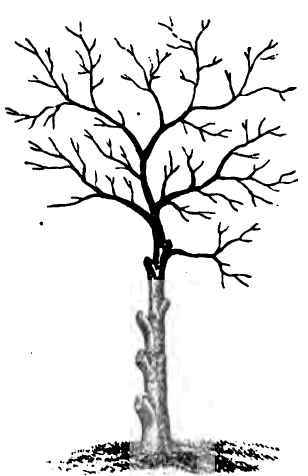
Fig. 2.
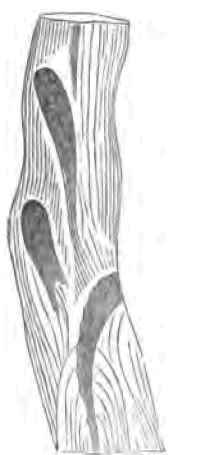
Fig. 3.
Good And Bad Pruning #1
This, with your capital illustration of the two methods, is so conclusive, that anybody with a thimbleful of brains can understand it better than if I should comment a whole chapter upon it.
Continue to:


My Books

