


Exercise I. Comparative Study Of Seed-Testers
Description
This section is from the book "Laboratory Manual Of Horticulture", by George W. Hood. Also available from Amazon: Laboratory Manual Of Horticulture.
Exercise I. Comparative Study Of Seed-Testers
Material. Dinner plates, blotters, canton flannel, germinating cups, tile germinator, Geneva seed-tester, germinating chamber.
Seed-testers are used for the purpose of testing the vitality of seeds. They differ greatly, and their efficiency varies with the kind. Study carefully four kinds.
1. The dinner-plate germinator consists of two large-sized dinner plates, one turned over the other, between which are two or three blotters covered with two pieces of canton flannel. Make a drawing showing the two plates and the inside material. The drawings should be at least three inches in diameter. Describe fully. Label all parts and describe the materials of which it is made. What can you say about the efficiency of this tester?
2. Germinating cups are small earthen cups three inches in diameter or three inches square and one and one-half inches deep, covered with a lid of the same size and shape as the top of the cup, in which are a number of small holes. Make a drawing, natural size, of a germinating cup and lid. Label, and give the dimensions on the drawings. Describe how the seeds can be germinated in this vessel. The cups must be placed in a shallow pan of water. Discuss the purpose of this procedure.
3. The tile germinator is a large tile twelve inches wide by fifteen inches long and two inches deep, in which have been molded pockets of varying sizes from one inch to three inches in diameter. This tester is placed in a shallow pan of water the same as the germinating cups. Make a drawing of the top view and a cross section, showing the number, size, and the depth of pockets. What advantage, if any, has this tester over the previous one? Give the exact dimensions on your drawing. Make the drawing two by three inches. How does the moisture get to the seeds? Discuss fully how you would germinate seeds in this tester. A pane of glass is usually placed over the top of the tester. What is the purpose of the glass? Give your opinion as to the value derived from its use.
4. The Geneva seed-tester is a galvanized iron pan ten inches wide, fourteen inches long, and three and one-half inches deep, with a ledge three eighths of an inch wide along the sides. The seeds are held in folds of cloth suspended on rods which rest on this ledge. Describe how the water is carried to the seeds.
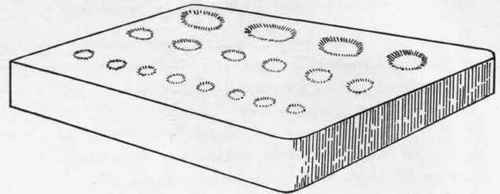
Fig. 1. Tile gerrninator, showing the different-sized holes in which the seeds are placed for testing.
Make a drawing of the pan, three inches in length and of proportional width, showing the ledge. Draw an end view of the cloth. Give the depth of the pocket in inches, and measure the length of each end of the cloth from the supporting-rod. Why should the end pieces of the cloth be longer than the depth of the pocket?
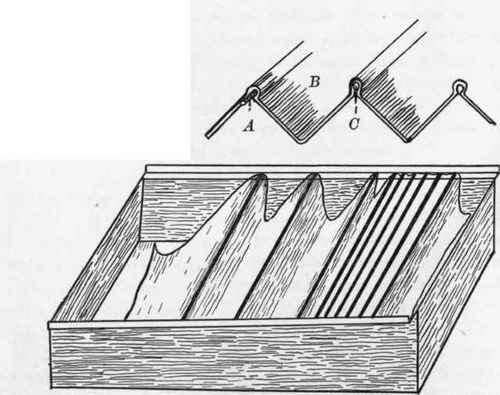
Fig. 2. Geneva seed-tester.
A, supporting-rod for the cloth; B, Canton flannel pocket; C, opening through which the supporting-rod passes
Continue to:


My Books

