


Exercise XII. A Study Of Soft Or Green Wood Cuttings
Description
This section is from the book "Laboratory Manual Of Horticulture", by George W. Hood. Also available from Amazon: Laboratory Manual Of Horticulture.
Exercise XII. A Study Of Soft Or Green Wood Cuttings
Material. Stock plants of the geranium, coleus, chrysanthemum, carnation, cactus, oleander, hydrangea, and rose, and rooted cuttings of each.
Soft or green wood cuttings are more commonly employed than those from mature wood because they root more quickly and can
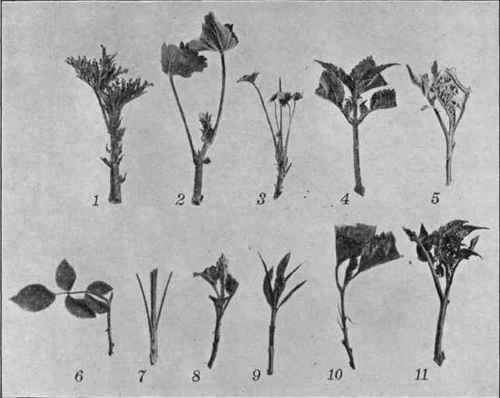
Fig. 6. Soft wood cuttings of different plants
1, rose geranium; 2, geranium; 3, variegated geranium; 4, 5, coleus; 6, rose; 7, carnation; 8, chrysanthemum; 9, oleander; 10, hibiscus; 11, tomato be handled under glass in winter, and also because more species are capable of propagation by this method. All soft-wooded and many ornamental plants are propagated by green wood cuttings. There are two general classes of green wood cuttings: first, those that are made from the soft and still-growing wood, and second, those that are made from the green but nearly ripened wood.
1. Select several plants, such as the geranium, coleus, carnation, chrysanthemum, cactus, etc., and study. Make a number of cuttings from each kind of plant. Draw a cutting, natural size, from each of the plants, and label. It is always best to remove about one half of the leaves before planting the cutting. Why is this procedure necessary? Explain. Now secure some cuttings from each of the above plants that have been rooted, and examine carefully. Where do the roots start? Is there any callus tissue present? If so, describe. Make a drawing showing the callus tissue, and the roots just starting. Label all of the parts.
2. Secure several plants with semihard wood, such as the oleander, rose, hydrangea, etc., and compare these plants with those in 1. What difference do you find in the texture of the wood? Describe any other unlikeness or differences. Make a natural-size drawing of each cutting, four inches in length. Differentiate between the still-growing and the nearly ripened wood cutting.
Continue to:


My Books

