


The Materials
Description
This section is from the book "Manual Of Gardening", by L. H. Bailey. Also available from Amazon: Manual of Gardening.
The Materials
The best materials for the main walks are cement and stone flagging. In many soils, however, there is enough binding material in the land to make'a good walk without the addition of any other material. Gravel, cinders, ashes, and the like, are nearly always inadvisable, for they are liable to be loose in dry weather and sticky in wet weather. In the laying of cement it is important that the walk be well drained by a layer of a foot or two of broken stone or brickbats, unless the walk is on loose and leachy land or in a frostless country.

71. Sod cutter.
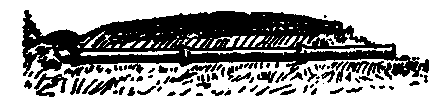
72. Draining the gutter and the drive.
In back yards it is often best not to have any well-defined walk. A ramble across the sod may be as good. For a back walk, over which delivery men are to travel, one of the very best means is to sink a foot-wide plank into the earth on a level with the surface of the sod; and it is not necessary that the walk be perfectly straight. These walks do not interfere with the work of the lawn-mower, and they take care of themselves. when the blank at the expiration of five to taken up and another one This ordinarily makes the best kind of a walk alongside a rear border. (Plate XI.) In gardens, nothing is better for a walk than tan bark.
The sides of walks and drives may often be planted with shrubbery. It is not necessary that they always have prim and definite borders. Figure 73 illustrates a bank of foliage which breaks up the hard line of a walk, and serves also as a border for the growing of flowers and interesting specimens. This walk is also characterized by the absence of high and hard borders. Figure 68 illustrates this fact, and also shows how- the parking between the walk and the street may be effectively planted.
Continue to:


My Books

