


Sowbread, Cyclamen
Description
This section is from the book "The Wild Garden", by W. Robinson. Also available from Amazon: William Robinson: The Wild Gardener.
Sowbread, Cyclamen
It was the sight of a grove nearly covered with Cyclamen hedersefolium, near Montargis, in France, that first turned my attention to the " Wild Garden." Both C. hederaefolium and C. europaeum may be naturalised with the greatest ease on light, loamy, or other warm and open soil. C. vernum, C. Coum, and C. repandum, are also well worthy of trial. Nothing can be more agreeable to the lover of hardy plants than endeavouring to naturalise these charming flowers, now rarely seen out of the greenhouse. The best positions would be among dwarf shrubs, etc., that would afford slight shelter, on banks or sunny open spots in copses or woods. Bare or dug borders they abhor, and a sunny warm exposure should be chosen. In the case of C. hederaefolium (and perhaps some of the others) ground under trees, bare, or with a very scant vegetation of herbs, etc., would do quite well if the soil were free and warm. There is scarcely a country seat in England in which the hardy Cyclamens, now almost entirely neglected by the gardener, could not be naturalised.
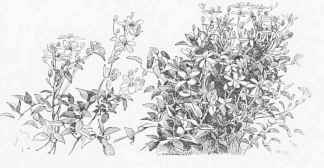
The White-flowered European Clematis (C. erecta).
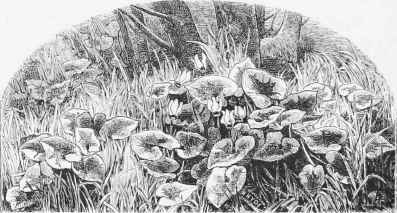
Cyclamens in the wild garden ; from nature.
Continue to:


My Books

