


Coca - Poisonous Alkaloids
Description
This section is from the book "Plants And Their Uses - An Introduction To Botany", by Frederick Leroy Sargent. Also available from Amazon: Plants And Their Uses; An Introduction To Botany
Coca - Poisonous Alkaloids
The drug coca consists of the dried leaves of the coca shrub (Fig. 174). These leaves mixed with ashes or lime are chewed extensively by the Indians of western South America as a means of lessening the sense of hunger and fatigue. Moderate use by the native mountaineers seems not to injure them, but excessive use produces effects as bad as those following the abuse of opium. Foreigners are found to be especially susceptible to the injurious properties of coca; and although with us it is widely used as a medicine, it must be regarded, like opium, as an especially dangerous drug never to be taken except on advice of one's physician. The effect of coca upon the nervous system appears to be due partly to some volatile substance not yet satisfactorily determined, and to an alkaloid known as cocaine (C17H21N04). This alkaloid has the remarkable property of producing insensibility to pain within certain restricted regions of the body to which it may be applied. Thus a small amount of a weak solution dropped upon the eyeball permits a surgeon to operate upon that organ without causing the slightest pain.
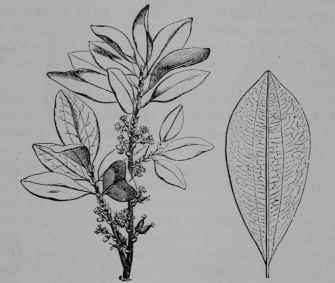
Fig. 174, I.-Coca (Erythroxylon Coca, Coca Family, Erythroxylaceoe). Flowering branch. Leaf. (Baillon.)-Shrub about 2 m. tall; leaves whitish green below; flowers yellow; fruit scarlet. Native home, Peru.
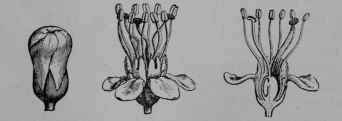
Fig. 174, II.-Coca. Flower-bud. Flower, entire. Same, cut vertically. (Baillon.)
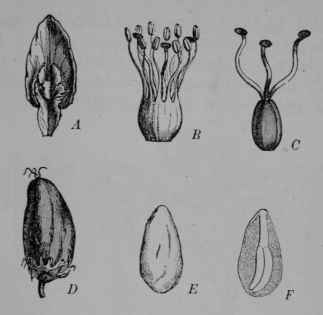
Fig. 174, III.-Coca. A, petal. B, stamens. C, pistil. D, fruit. E, seed, entire. E, same, cut vertically. (Baillon.)
Continue to:


My Books

