


Part 36. Herbage Vegetables. Part 4
Description
This section is from the book "Plants And Their Uses - An Introduction To Botany", by Frederick Leroy Sargent. Also available from Amazon: Plants And Their Uses; An Introduction To Botany
Part 36. Herbage Vegetables. Part 4

Fig. 69.-Brussels Sprouts (B. oleracea vav gemmifera). Plant at close of first vear's growth. Much reduced. (Nicholson.)

Fig. 70.-Cauliflower (B. oleracea, var. Botrytis). Plant at close of first year's growth, with a few of the leaves cut away to show the fleshy, compacted flower-cluster. Much reduced. (Baillon.)
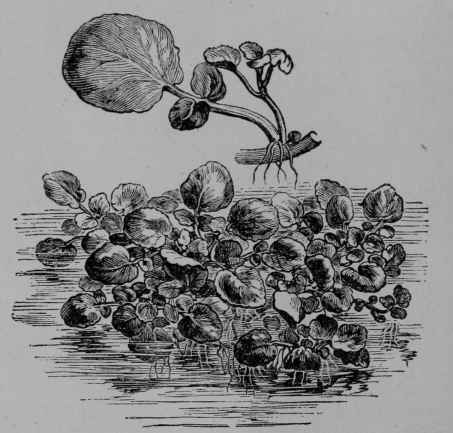
Fig. 71, I.-Watercress (Nasturtium officinale, Mustard Family, Cruciferoe). Plant showing method of growth. (X 1/4) and a piece of stem bearing roots, leaf, and a young branch, natural size. (Vilmorin.)
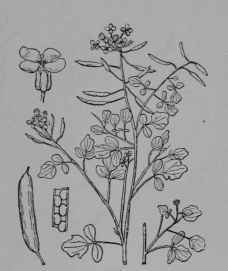
Fig. 71, II.-Watercress. Flowering branch. Flower (petals white). Fruit. Piece of pod cut lengthwise to show the two rows of seeds. (Britton and Brown.)
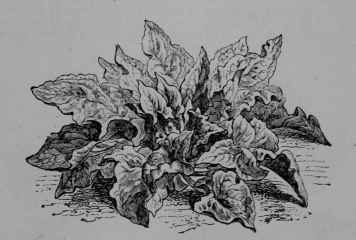
Fig. 72.-Spinach (Spinacia oleracea, Goosefoot Family, Chenopodiaceoe). Plant, showing first year's rosette of leaves. (Vilmorin.)-An annual or sometimes a biennial; leaves smooth, deep green; flowers greenish; fruit dry.
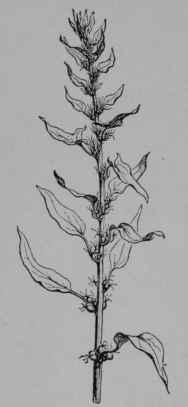
Fig. 73.-Spinach. Flowering branch. (Baillon.)

Fig. 74.-Spinach. A, staminate flower, top view. B, pistillate flower side view. C, pistil, with part of ovary wall cut away to show the ovule within. D, fruit. E, the same, cut in half vertically showing seed and coiled germ. F, G, other forms of fruit. All the figures more or less magnified. (Volkens.)
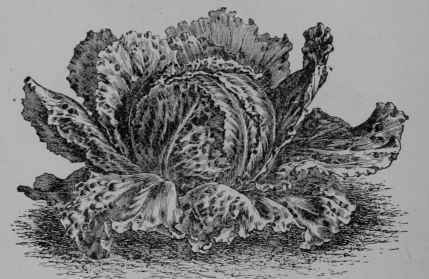
Fig. 75.-Lettuce (Lactuca sativa, Sunflower Family, Compositoe). Plant during early period of growth, showing the compacted rosette of leaves. (Nicholson.)-The plant is an annual, smooth throughout, attaining a height of about 1 m., flowers yellow.
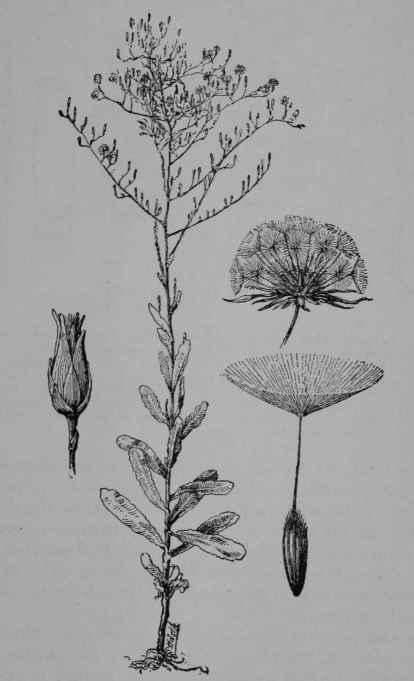
Fig. 76.-Lettuce. Plant in flower and fruit. (Atkinson.)-This is the wild form known as Lactuca scariola from which the garden varieties are believed to be derived. When growing in open land the leaves commonly arrange themselves in two vertical rows with one edge directed upward and the tips pointing northward or southward. It is thus a "compass plant" similar to that of our western prairies described by Longfellow in Evangeline, Part Second, Section IV. The parachute-like fruits are carried far by the wind, and are finally anchored by means of the spines near the base of the stalk.
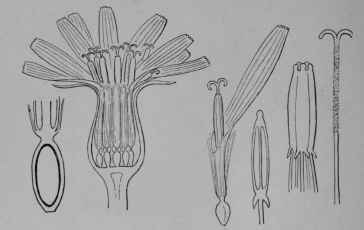
Fig. 77.-Lettuce. Flower cluster, enlarged. Base of a flower cut vertically to show the single ovule within the ovary, and how the calyx, corolla, and style grow out from it above. A single flower. An anther, inner view showing openings through which pollen is shed upon the style. The stamen-tube formed by union of the five anthers. Style and stigmas, showing the hairy region which pushes up through the stamen-tube like a bottle-brush carrying upon it the pollen to be rubbed off by insect visitors. (Redrawn from Thome.)
When the raw materials above mentioned are present in a living part containing chlorophyll and exposed to sunlight, the energy of the sun's rays is utilized to separate the oxygen from the carbon and unite the latter with the elements of water to make a carbohydrate. The first food-product that we can detect is usually starch, but the giving off of oxygen (especially well seen in a water-plant) is evidence that food-making is in progress.
Fats and proteids may be formed from carbohydrates in various parts of the plant independently of sunlight; but while fats require only a diminution in the amount of oxygen, the proteids must have nitrogen, and often sulphur or phosphorous (derived from the salts above mentioned) combined with the carbon, hydrogen, and oxygen of the carbohydrates. Other elements found in the mineral salts aid in food-making by their mere presence. Thus a minute amount of iron is necessary to the formation of chlorophyll, and potassium controls the making of carbohydrates, although neither the iron nor the potassium enter into the product. Much of the process of food-making as well as of the conditions under which it takes place, is as yet imperfectly understood by physiologists.
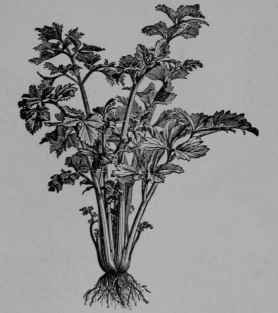
Fig. 78.-Celery (Apium graveoleus, Parsley Family, Umbelliferce). Plant in its first year, showing leaves and roots. (Nicholson.)
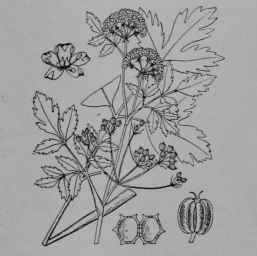
Fig. 79.-Celery. Leaf. Upper part of flowering stem, showing flower clusters and fruit. A flower, enlarged. Fruit. The same cut across. (Britton and Brown.)-The plant is a biennial, smooth throughout; leaves 25-50 cm. long, bright green (except when "blanched" by culture); flowering stem, erect 3-9 dm. tall; flowers white; fruit, dry, brown. The plant as it grows wild in salt marshes and by the seashore is somewhat poisonous, but becomes wholesome in cultivation.
Continue to:


My Books

