


Part 36. Herbage Vegetables. Part 5
Description
This section is from the book "Plants And Their Uses - An Introduction To Botany", by Frederick Leroy Sargent. Also available from Amazon: Plants And Their Uses; An Introduction To Botany
Part 36. Herbage Vegetables. Part 5
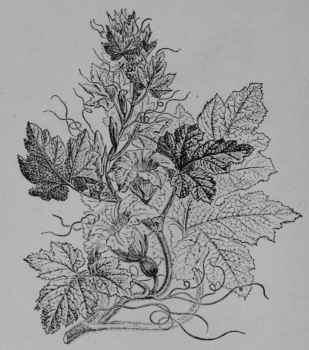
Fig. 80, I.-Pumpkin (Cucurbita Pepo. Gourd Family, Cucurbitaceoe). Flowering branch. (Baillon.)-The plant is an annual climbing more or less by means of tendrils, and attaining a length of 7 m.; stem and leaves bright green, bristly hairy; flowers yellow; fruit variously colored in different varieties, and widely different in appearance as shown in Figs. 81, I-IV.
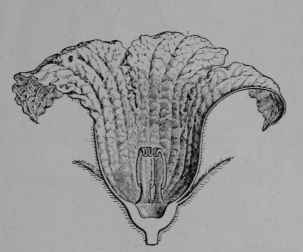
Fig. 80, II.-Pumpkin, staminate flower, out vertically. (Baillon.)
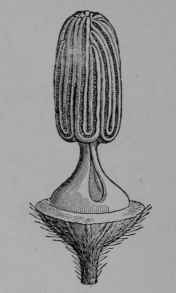
Fig. 80, III.-Pumpkin, the same with calyx and corolla removed to show the united stamens, enlarged. (Baillon.)
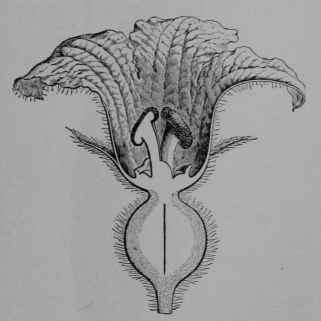
Fig. 80, IV.-Pumpkin, pistillate flower, cut vertically. (Baillon.)
Fig. 80, V.-Pumpkin, the same with calyx and corolla removed to show the three-branched style and stigmas. (Baillon.)
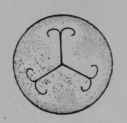
Fig. 80, VI.-Pumpkin, ovary cut across near the top. (Baillon.)
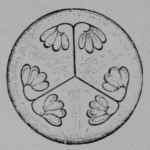
Fig. 80, VII.-Pumpkin, ovary cut across near the middle, showing the position of the ovules. (Baillon.)
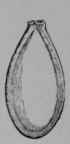
Fig. 80. VIII.-Pumpkin, seed. (Baillon.)
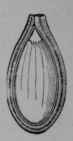
Fig. 80, IX.-Pumpkin, seed cut lengthwise between the seed-leaves of the germ. (Baillon.)
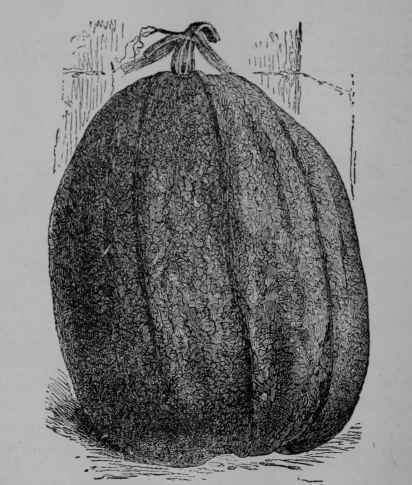
Fig. 81, I.-Pumpkin, fruit, 1/6. Color grayish green. (Vilmorin.)
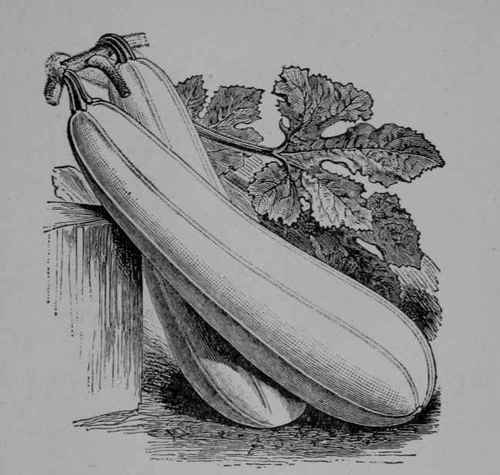
Fig. 81, II.-Long White Squash (Cucurbita Pepo, var.). Fruit and leaves. 1/6. Fruit pale, yellowish. (Vilmorin.)
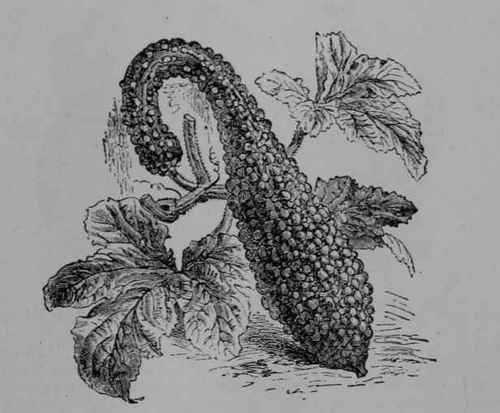
Fig. 81, III.-Summer Crook-neck Squash (Cucurbita Pepo var.). Fruit and leaves. 1/6. Fruit bright orange. (Vilmorin.)
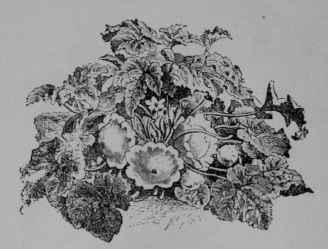
Fig. 81, IV.-Scallop Squash (Cucurbita Pepo, var.). Plant showing leaves, flowers, and fruit. 1/16. Fruit pale, yellowish. (Vilmorin.)
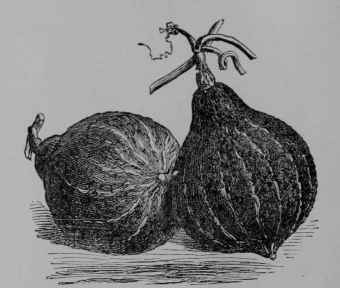
Fig. 82, I.-Hubbard Squash (Cucurbita maxima, var., Gourd Family, Cucurbitaceoe). Fruit. 1/6. (Vilmorin.)-The plant as regards stem, leaves and flowers, resembles the preceding species; fruit variously colored.
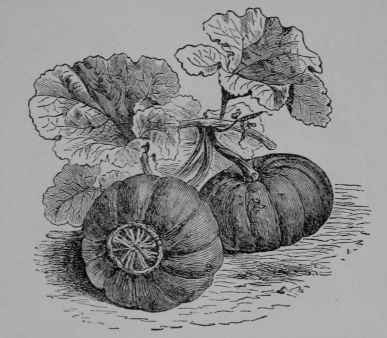
Fig. 82, II.-Turban Squash (Cucurbita maxima, var., Gourd Family, Cucurbitaceoe). Leaves and fruit, 1/6. Fruit greenish, yellowish, or reddish. (Vilmorin.)
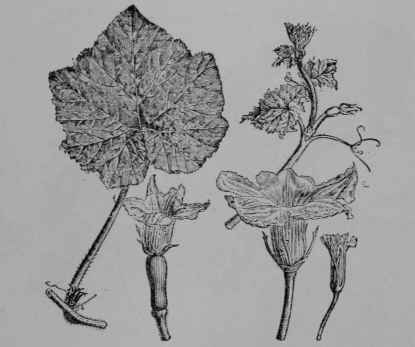
Fig. 83.-Winter Crook-neck Squash (Cucurbita moschata, Gourd Family, Cucurbitaceoe). Leaf. Flowering branch. Pistillate flower. Staminate flower. Staminate flower bud, showing leaf-like sepals. (Nicholson.)- Plant similar to the preceding species, but soft-hairy and the leaves often with silvery spots; fruit variously colored.
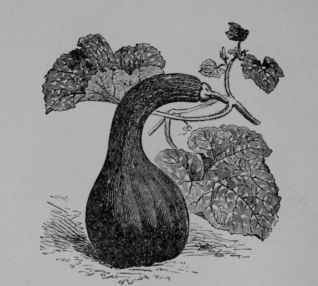
Fig. 84.-Winter Crook-neck Squash. 1/6. Fruit and leaves. (Vilmorin.)
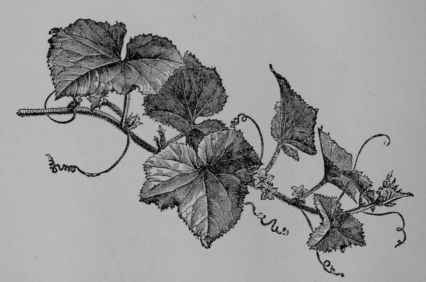
Fig. 85.-Cucumber (Cucumis sativus, Gourd Family, Cucurbitaceoe). Flowering branch. (Nicholson.)-Plant a rough hairy annual, climbing by tendrils; stem about 1-2 m. long; leaves bright green; flowers yellow; fruit variously colored, smooth or prickly.
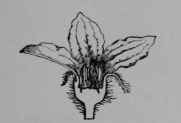
Fig. 86, I.-Cucumber. Staminate flower, cut vertically. (Baillon.)
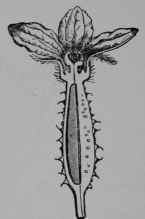
Fig. 86, II.-Cucumber. Pistillate flower, cut vertically. (Baillon.)

Fig. 87.-Cucumber, fruit. (Nicholson.)
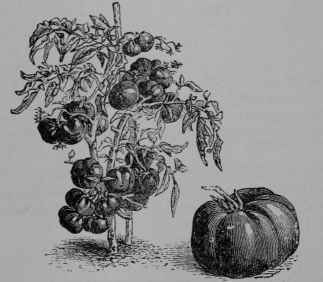
Fig 88.-Tomato (Solarium Lycopersicum, Nightshade Family, Solanaceae). Plant in fruit. 1/12. Fruit. 1/3. (Vilmorin.)-An annual; stem and leaves soft hairv, dull green; flowers yellow; fruit red or yellow.
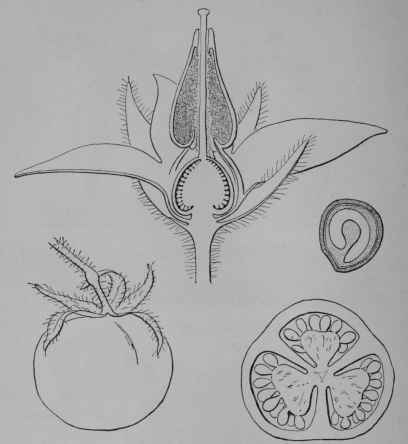
Fig. 89.-Tomato. Flower, cut vertically, enlarged. Fruit, side view. Same, cut across. Seed, cut vertically to show curved germ, in seed-food. (Redrawn from Nees.)
A living plant has been well compared to a food-factory where we may see the raw materials which go in and the products which come out, but where we can only guess as to what goes on inside, for on the door is written "No admittance." We know that in some way the body of a plant is built up of highly complex materials which it makes by recombining the elements of relatively simple substances. We know also that so long as it lives the plant is breaking down the complex compounds into simpler ones which it gets rid of as well as it can or allows to accumulate where they will do the plant no harm. The coloring matters and flavoring substances of the vegetables already studied are examples of such by-products.
All of the chemical changes taking place in the living parts of an organism are together called metabolism,1 the constructive changes being distinguished as anabolism,2 and the destructive ones as catabolism.3 The forming of a carbohydrate in sunlight is called photosynthesis.4
1 Met-ab'o-lism - Gr. meta, beyond; ballein, throw.
2 An-ab'o-lism - Gr. ana, upward.
3 Cat-ab'o-lism - Gr. kata, downward.
4 Pho-to-syn'the-sis - Gr. photos, light; synthesis, a putting together.
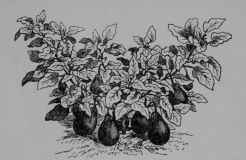
Fig. 90.-Egg Plant (Solarium Melongena, Nightshade Family, Solanaceoe). Plant in fruit, 1/10. (Vilmorin.)-An annual; flowers similar in form to those of tomato, but violet in color; fruit dark violet, or whitish.
Food-making being the peculiar task of green herbage renders foliage as a rule less useful than other parts for the storage of food. Hence we find leafy shoots accumulating food only incidentally, and then generally in largest amount where least exposed to light. The main work of foliage is to utilize sunlight for the making of food, and in so doing it keeps the surrounding air fit for animals to breathe.
Continue to:


My Books

