


Part 37. Fruit Vegetables
Description
This section is from the book "Plants And Their Uses - An Introduction To Botany", by Frederick Leroy Sargent. Also available from Amazon: Plants And Their Uses; An Introduction To Botany
Part 37. Fruit Vegetables
37. Fruit-vegetables, as the name implies, are succulent fruits which are used in the same manner as herbage and earth-vegetables. The most important examples are the cucumber, the various sorts of squash and pumpkin, the tomato, and the egg-plant (Figs. 80-90). To these must be added the so-called "string-beans" and "wax-beans" which are merely varieties of the kidney-bean already noticed wherein the green esculent pod plays a more important part than the unripe seeds.
From the fact that they are used more as "vegetables" than as "fruits" we should expect fruit-vegetables to resemble more nearly the former in chemical composition. We find this to be the case. In their percentage of water, ash, cellulose, digestible carbohydrate, and fat, as will be seen from the chart, there is a close correspondence between these and the other vegetables; while in the matter of proteid the fruit-vegetables hold a position intermediate between the class above and the class below them.

Fig. 91, I.-Apple (Pyrus Malus, Rose Family, Rosacea:). 1, twig showing winter buds. 2, flowering branch. 3, flower cut vertically, petals removed. 4, fruit, leaves, and bud. 5, seed. 6, wood, cut across the grain; and magnified about 20 diameters. (Mouillefert.)-The plant is a small, often shrub-like tree with rounded head; young stems and under surface of leaves grayish woolly; flowers white or rosy; fruit very various in form and coloring.

Fig. 91, II.-Apple, fruit, cut in halves vertically (A) and across (B), showing the withered sepals (K) once fed by the woody strands (g) which pass from the woody stem below through its enlarged upper part surrounding the core (f) or ripened pistil. (Focke.)

Fig. 92.-Pear (Pyrus communis, Rose Family, Rosaccoe). 1, flowering branch, 2, flower, cut vertically. 3, fruit, cut vertically, diagram of flower. (Wossidlo.)-The plant is a tree, sometimes attaining a height of 25 m., and living to a great age; growing parts soon smooth; flowers white; fruit various in form and color, with the flesh gritty unless ripened off the tree.
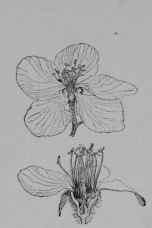
Fig. 93, I.-Quince (Cydonia vulgaris, Rose Family, Rosacea:). Flower, expanded, and cut vertically. (Baillon.)-The plant is a shrub or small tree, with slender, thornless branches; leaves hairy; flowers white or pink; about 5 cm. broad; fruit finely hairy, yellowish.
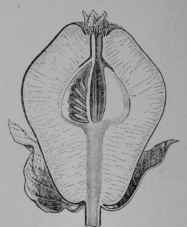
Fig. 93, II.-Quince fruit, cut vertically. (Baillon.)
Continue to:


My Books

