


Part 39. Miscellaneous Food Products. Part 4
Description
This section is from the book "Plants And Their Uses - An Introduction To Botany", by Frederick Leroy Sargent. Also available from Amazon: Plants And Their Uses; An Introduction To Botany
Part 39. Miscellaneous Food Products. Part 4

Fig. 111.-Pineapple (Ananas sativus, Pineapple Family, Bromeliaceoe). A, flowering shoot, bearing the cone-like cluster of flowers each protected by a bract. B, fruit, showing continuation of the shoot from its tip. C, a flower. D, same, cut vertically. E, a petal, with two scales at the base, and a single attached stamen. F, calyx and style with branching stigma. G, ovary, cut across. H, ovule. (Koch, Le Maout and Decaisne.)-A perennial herb with short stem and tough pale green leaves; flowers bluish; fruit reddish or orange. New plants are grown from the tuft of leaves crowning the fruit.
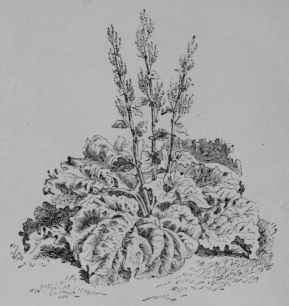
Fig. 112.-Garden rhubarb (Rheum Rhaponticum, Buckwheat Family, Polygonaceoe). Plant in flower, x 1/20. (Vilmorin.)-A perennial herb; leaf-stalks often red; flowers whitish; fruit brown and dry.
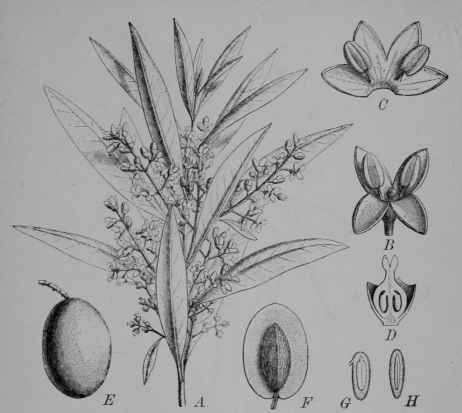
Fig. 113.-Olive (Olea europoea, Olive Family, Oleaceoe). A, flowering branch. B, flower. C, corolla and stamens. D, calyx and pistil, cut vertically. E, fruit. F, same with the pulp cut through to show the "stone" within. G, seed, cut vertically between the seed-leaves. H, same, cut vertically across the seed-leaves. (Knoblauch.)-An evergreen tree or shrub, with grayish-green leaves, cream-colored, fragrant flowers, and purplish fruit.
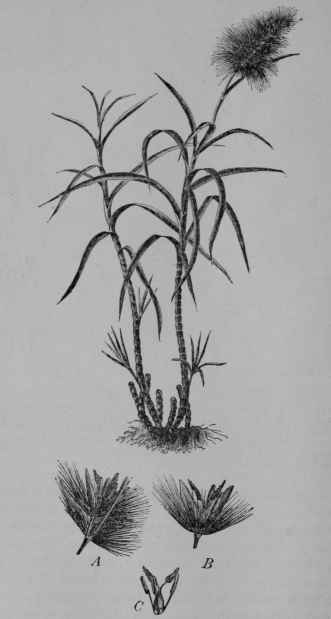
Fig. 114.-Sugar-cane (Saccharum officinarum, Grass Family, Gramineoe). Plant in flower. A, part of spike, showing long silky hairs. B, spikelet detached. C, flower, showing stamens, pistil and lodicules at the base, (Bentley and Trimen.)-Perennial, attaining a height of 4 m.; stem variously colored, 2-5 cm. thick.

Fig. 115, I.-Cacao (Theobroma Cacao, Silk-Cotton Family, Sterculiaceoe). The plant is a tree 3-13 m. tall, with shining leaves, and brownish-red flowers which spring from the trunk and older branches, and produce yellowish, orange, or brownish fruits, somewhat resembling a squash. (Baillon.)
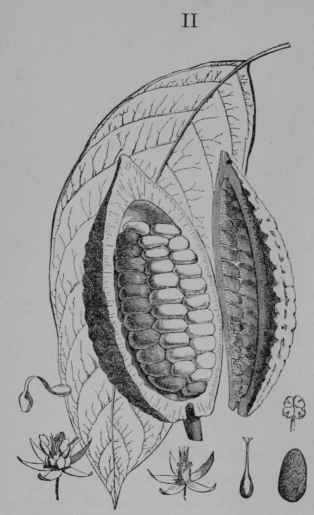
Fig. 115, II.-Cacao. Leaf. Flower, complete. Same with petals removed. A petal detached. A stamen, showing the four-celled anther. Pistil. Seed. (Baillon.)
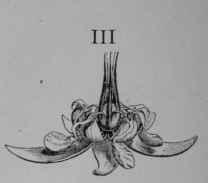
Fig. 115, III.-Cacao flower, complete, (Baillon.)
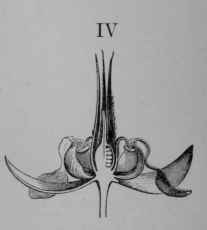
Fig. 115, IV.-Cacao flower, cut vertically. (Baillon.)
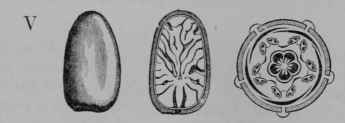
Fig. 115, V.-Cacao. Seed, side view. Same, cut vertically, showing a wrinkled seed-leaf. Diagram of flower. (Baillon.)
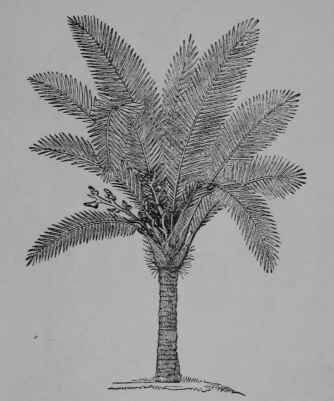
Fig. 116, I.-Prickly Sago Palm (Metroxylon Rumphii, Palm Family, Palmacece). Tree about 10 m. tall or less; leaves very long and plumelike, prickly at base; flowers numerous, imperfect, on large special branches; fruit covered with hard woody scales. (De Colange.)
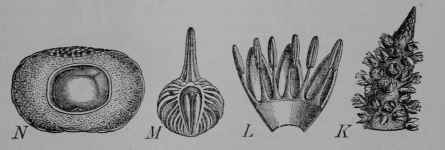
Fig. 116, II.-Smooth Sago Palm (Metroxylon loeve, Palm Family, Palmaceoe). K, tip of a flower-cluster branch. L, stamens on corolla of a staminate flower. M, pistil cut vertically, showing ovules and young scales. N, fruit cut vertically to show the seed surrounded by dry flesh and woody scales. (Blume.)-The plant is similar to the prickly sago palm but larger and without prickles.
Continue to:


My Books

