


Part 39. Miscellaneous Food Products. Part 5
Description
This section is from the book "Plants And Their Uses - An Introduction To Botany", by Frederick Leroy Sargent. Also available from Amazon: Plants And Their Uses; An Introduction To Botany
Part 39. Miscellaneous Food Products. Part 5
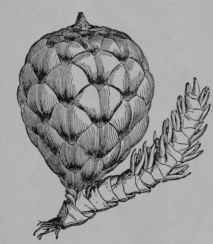
Fig. 116, III.-Prickly Sago Palm. Ripe fruit and remains of a staminate branch of the flower-cluster. (LeMaout and Decaisne.)-Three years are required to ripen this strangely armored fruit.
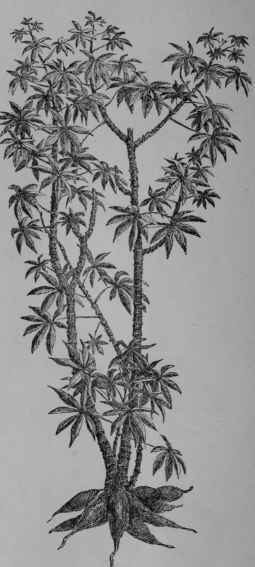
Fig. 117, I.-Bitter Cassava (Manihot utilissima, Spurge Family, Euphorbiacece). A shrub 2-3 m. tall, producing swollen roots weighing 10 kg. or more; flowers staminate and pistillate on the same plant; fruit dry, breaking apart. (Pax.)
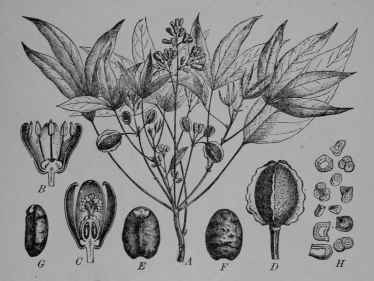
Fig. 117, II.-Bitter Cassava. A, flowering and fruiting branch. B, staminate flower, cut vertically. C, pistillate flower, cut vertically. D, fruit. E, F, G, seed, viewed from front, back, and side. H, starch grains from the root, much magnified. (Pax, Martins, and Tschirch.)
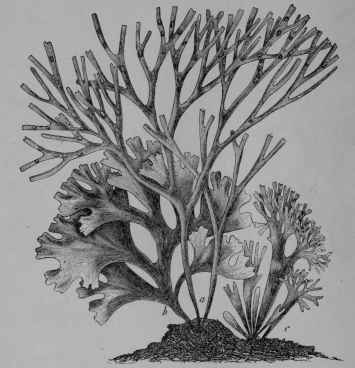
Fig. 118.-Carrageen (Chondrus crispus, Carrageen Family, Gigartinaceoe.) Various forms of the seaweed, about natural size, the form a showing the "fruit" as oval masses embedded in the branches. The whole plant is dark red or purplish when alive. (Luerssen.)

Fig. 119.-Field Mushroom (Agaricus campestris, Gill-mushroom Family, Agaricaceoe). Fruit-bodies, natural size, in various stages of growth, a, "button stage," in which the regions of stalk and cap are just distinguishable; b, a somewhat later stage, cut vertically to show the "gills" just appearing below the cap; c, a still later stage, similarly cut, in which the gills now fully formed are yet protected below by the membranous "veil"; d, stage in which the cap is almost expanded, showing on its under side the veil partly torn from the edge and exposing the pink gills; e, final stage in which the cap is fully expanded, and the veil, now entirely free from the rim, remains only as a ring around the stalk. (Luerssen.)-The gills, at first pink, turn finally dark purplish brown, owing to the formation upon them of dark dustlike "spores" which fall from the exposed gills, are carried away by the wind, and give rise to new plants when favorably placed upon well-manured ground. These spores first produce a network of threads which feed upon the decaying materials, and finally send up the fruit-bodies above the surface.
Continue to:


My Books

