


Resins - Poisonous Drugs
Description
This section is from the book "Plants And Their Uses - An Introduction To Botany", by Frederick Leroy Sargent. Also available from Amazon: Plants And Their Uses; An Introduction To Botany
Resins - Poisonous Drugs
Resins are non-crystalline solids or semisolids, soluble generally in alcohol, ether, and volatile oils, but insoluble in water. They contain the same elements as volatile oils, but with a larger proportion of oxygen. On this account and from the circumstance that they are commonly associated in plants with volatile oils it is supposed that they are derived from the latter by oxidation; but they are often complex mixtures of obscure chemical composition. Comparatively few resins are poisonous, and of these, only those contained in the drugs called male-fern and Indian hemp need here concern us. It is the dried and pulverized underground stem of the male-fern (Fig. 170) and related species which constitutes the drug long known as a most valuable means of expelling tapeworms. The resin, which is the active constituent, has proved, however, in overdoses to be a violent poison. The resin of Indian hemp (Fig. 171) is obtained chiefly from the pistillate flower-clusters and fruits. Under the name of "hashish" resinous parts of the plant are smoked as an intoxicant by Eastern peoples. Medicinally the drug is used for its quieting effect upon the nerves in certain diseased conditions. It is highly injurious when taken in overdoses, and terrible effects follows its habitual use as an intoxicant.
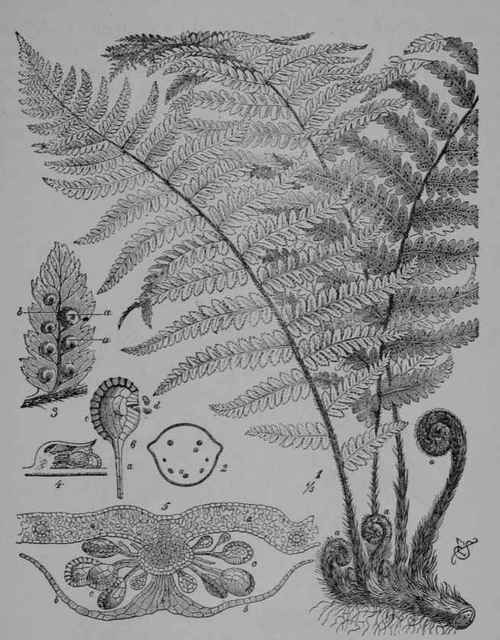
Fig. 170.-Male-fern (Aspidium Filix-mas, Polypody Family, Polypodiaceoe). 1, plant showing the rootstock which grows underground and produces roots below, and above gives rise to leaves which unfold from coils (a, a) and finally produce "fruit dots" or sori on the back, 2, rootstock cut across showing the woody vessels (a, a) through which the sap runs. 3, segment of the leaf, under side, showing sori or clusters of spore-cases (b) each cluster protected by a cover or indusium(a). 4, sorus cut vertically across the indusium. 5, the same cut at right angle to 4 through the leaf (a), much enlarged to show the indusium (b), and the spore-cases (c). 6, a spore-case discharging spores. (Wossidlo.)-A perennial herb; leaves about 30-100 cm. long; fruit dots brownish. Native home, Northern Europe and North America.
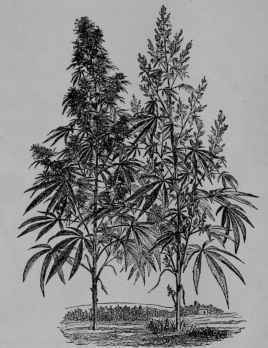
Fig. 171, I.-Indian Hemp (Cannabis sativa, Mulberry Family, Moraceoe). Staminate and pistillate plants. (Baillon.)-An annual 1-3 m. tall; leaves roughish; flowers greenish; fruit dry. Native home, Central Asia.
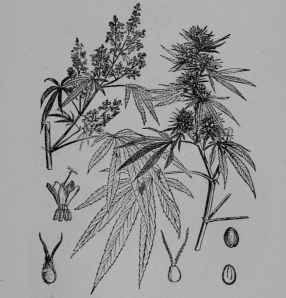
Fig. 171, II.-Indian Hemp. Staminate and pistillate flower-clusters. Staminate flower. Pistillate flower. Pistil. Seed, entire and cut vertically. (Baillon.)
Continue to:


My Books

