


178. Eucalyptus obtusiflora
Description
This section is from the book "A Research On The Eucalypts Especially In Regard To Their Essential Oils", by Richard T. Baker, Henry G. Smith. Also available from Amazon: A Research On The Eucalypts And Their Essential Oils.
178. Eucalyptus obtusiflora
(DC, Prod., iii, p. 220; and Mem. Myrt, t. 10.)
Systematic. - A stunted tree, with either a smooth or roughish bark. Leaves lanceolate, rarely falcate, shortly acuminate, usually about 3 inches long and under 1 inch wide, petiole flattened, often shining; venation distinctly marked, lateral veins spreading, intramarginal vein removed from the edge. Peduncles axillary, flattened, about 1 inch long, bearing four to eight flowers. Buds sometimes 6 lines long and 2 lines broad, and constricted below the operculum; calyx 4 lines in diameter; operculum depressed, but sometimes almost conical, or shortly acuminate.
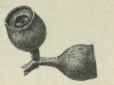
Fruit. - Shortly pedicellate, ovoid-truhcate, contracted at the rim, which is thin and countersunk; valves inserted; about 9 lines long and 5 lines broad.
They have a strong resemblance to E. stricta, E. apiculata, or E. trachyphloia.
Habitat. - This is a small stunted shrub found mostly on the Hawkesbury sandstone, New South Wales.
REMARKS. - The leaves are thick, straight, and rigid, and might serve as a fodder, as their yield of oil is nil, as far as our experience goes. Leaves were obtained from La Perouse, N.S.W., 7th June, 1898. Although 280 lb. of leaves and branchlets were put through the still, not a drop of oil was obtained - not even sufficient to form a film upon the surface of the water in the receiver. We have obtained but very little oil from several species, but this is the only one from which we have obtained none. (See tabulated list for percentages of oil obtained.)
Continue to:


My Books

