


II. Filamentous Fungi Or Moulds
Description
This section is from the book "A Manual Of Pathology", by Joseph Coats, Lewis K. Sutherland. Also available from Amazon: A Manual Of Pathology.
II. Filamentous Fungi Or Moulds
The root part or mycelium of these fungi consists, as we have seen, of hyphae or threads, from which may grow up the stems which produce the spores. The common moulds belong, for the most part, to three genera - penicillium, aspergillus, and mucor. The fructification of penicillium is, characterized by the formation, on the summit of the stem, of rows of spores (see Fig. 158, which, from their brush-like appearance, suggest a pencil. The fructification of the aspergillus consists of spherical heads.
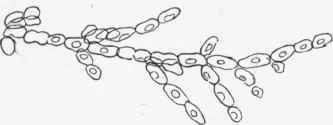
Fig. 157. - Formation of conidia in submerged portion of penicillium.

Fig. 158. - Aerial growth of penicillium.
The filamentous fungi are mostly pure saprophytes, and some of them, while usually saprophytic, become occasionally parasitic. On the other hand, there are some which are only known as parasites, although they may have also a saprophytic existence. These latter are confined to the skin and its appendages.
Continue to:


My Books

