


Einhorn's Method
Description
This section is from the book "Diseases Of The Stomach", by Max Einhorn. Also available from Amazon: Diseases of the Stomach.
Einhorn's Method
In order to facilitate the internal or direct electrization of the stomach I 3 have constructed an electrode on the same principle as the stomach bucket. This electrode once swallowed reaches the stomach without further artificial aid. The silk thread of the bucket is represented in the electrode by a very fine (1 mm. in diameter) rubber tube through which a very fine, soft, conducting wire runs to the battery. The end piece of the electrode consists of a hard-rubber capsule with many openings. In this capsule lies a metallic button which is connected with the wire. (Figure 53 shows the electrode in natural size).
1 Charles G. Stockton: "A New Gastric Electrode," Medical Record, November 9th, 1889, p. 530.
2Von Ziemssen: "Ueber die physikalische Behandlung chro-nischer Magen- und Damikrankheiten." p. 10. Leipzig. 1888.
3Max Einhorn . Medical Record, May 9th, 1891.
The rubber capsule serves to avoid the direct contact of the metal with the stomach wall; the circuit is completed by the water the stomach contains.
This electrode I have termed "Deglutable Stomach Electrode'1.
Method
The patient drinks, best when in a fasting condition, or one to two hours after a light breakfast, one glassful of water, tea, or coffee. The patient has now to open his mouth widely, and the electrode (the capsule piece) is placed far behind on the root of the tongue and he is ordered to swallow. He again drinks some water, and the electrode finds its way to the stomach without any further assistance.
In order to recognize this point precisely, it is advisable to make some mark on the tubing at a distance of 40 cm. from the capsule; as soon as this mark comes to the teeth we are sure that the electrode is in the stomach and we can apply the electricity to the patient.
According to my belief, it is of importance to apply gastro-electrization according to a certain plan. Thus it will not appear superfluous to give a detailed description of the electric application I1 generally employ.
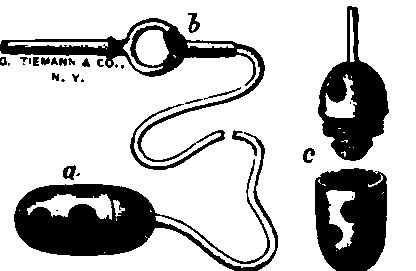
Fig. 53.-The Deglutable Stomach Electrode (Einhorn).
1 The Deglutable Stomach Electrode is manufactured by George Tiemann & Co.
The patient, when the deglutable electrode is within the stomach, opens his clothes, so that the abdomen is accessible. The key of the deglutable electrode is connected with the cord (negative pole) running to the battery.
Gastrofaradization
Sitting, ten minutes; at first large plate electrode at the gastric and epigastric region for five minutes, then a small ordinary sponge electrode. The electrode is at first moved up and down from left to right in the gastric region (sometimes, especially when there is constipation, the electrode is passed over the region of the colon - ascendens, transversum, descendens - always beginning in the right iliac region and stopping at the left iliac region [duration, two minutes]); thereafter one proceeds from the gastric region from right to left to the back, and remains at the left side of the seventh dorsal vertebra for one minute. (At this place the current can be applied quite strongly, and most of the patients then experience a slight sensation within the stomach; the patients find it difficult to describe this sensation; some assert that they experience a dragging feeling, others a feeling of weight, and others again of pinching. All of them refer this feeling to the stomach and locate it opposite different heights of the abdominal wall.) We then return to the front, moving the electrode gently up and down over the gastric region for two minutes, gradually decreasing the current, and thus ends the sitting.
The current has to be of such a strength that it causes distinct contractions of the abdominal walls; but it is not well to have it so strong that the patient experiences pains.
1Max Einhorn: "Therapeutic Results of Direct Electrization of the Stomach," Medical Record, January 30th and Fehruary 6th, 1892. - "Further Experiences with Direct Electrization of the Stomach," New York Medical Journal, July 8th, 1898.
Continue to:


My Books

