


Chapter VII. Degrees Of Hypnosis
Description
This section is from the book "Practical Lessons In Hypnotism", by Wm. Wesley Cook. Also available from Amazon: Practical Lessons In Hypnotism.
Chapter VII. Degrees Of Hypnosis
Arbitrary division - Power of the operator - Susceptibility of the subject - Drowsiness - Light sleep - Profound sleep - Absolute obedience - Somnambulism - Catalepsy - Lethargy.
The extent to which a person may be placed under hypnotic influence varies according to the character of the individual, the power of the operator, the frequency of hypnosis and other influences.
As a rule, the old cannot be so profoundly influenced as the young, and an operator can have the greater influence over a subject younger than himself, and the more frequent the seances the greater will be the control that may be manifested. An operator who has hypnotized a subject seven or eight times has probably gained as great a control as he can ever exercise over that particular subject as far as the profundity of hypnosis is concerned.
The division of the hypnotic state into various degrees is necessarily somewhat arbitrary, as the transitions from one degree to another are not marked by abruptness. By analogy the division may be compared to the colors of the rainbow - one blending into the other with no absolute dividing lines. Still in the spectrum we recognize seven distinct colors, commencing with the violet and ending with the red, although between these extremes are all conceivable tints and colors.
For all practical purposes, and for the convenience of describing and recording experiments, the following classification of hypnotic phenomena may be accepted:
First Degree - Drowsiness
The subject realizes and manifests undoubted sleepiness. The eyes seem heavy and he is in the condition of one who is inclined to sleep. Many persons are thrown into this identical condition by the influence of the quietude of church service and the monotonous voice of a minister preaching a tiresome sermon. He finds it hard work to keep awake, although he realizes all that is said and all that goes on about him. To tell him, in this stage, that he couldn't keep his eyes open, would be to awaken him. Any pronounced command or unfavorable circumstance would quickly destroy the influence obtained, although by favorable influence this degree of hypnosis is easily increased and passes into the next degree.
Second Degree - Light Sleep
There is undoubted evidence of actual sleep with consciousness of what is taking place. The eyes are closed and an emphatic suggestion that they are tight shut will cause the subject to close them very tight, although to dare him to open them might arouse him sufficiently to do so. Nevertheless, in this stage such a statement as "you cannot open your eyes," will usually have the effect of rendering his hypnotic condition more profound. Subjects in this second degree realize everything that is said in their presence, and upon awakening will remember all that was said and done. They may be awakened by unusual noises or by the withdrawal of the operator's presence.
Third Degree - Profound Sleep
The subject will usually droop his head, breathe somewhat heavily and manifest no tendency to awaken. Disturbing influences will not arouse him and the operator may talk to others or withdraw, while the subject will still sleep. Upon suggestion he will open his eyes or if challenged to open them with the remark that he cannot, he will make vain attempts to do so. He will remain in any position suggested that does not require extraordinary effort. Upon awakening he will remember indistinctly all that was said and done.
Fourth Degree - Absolute Obedience
In this degree the subject completely loses his individuality and is a mere automaton in the hands of the operator. He manifests no inclination to falter when commanded to act. He will open and shut his mouth, rotate the hands faster and faster, talk on various topics, make speeches, sing, dance and perform any action that may be ordinarily performed by him while awake, and when awakened he will have no recollection of what has taken place.
Fifth Degree - Somnambulism
In this state all the senses of the body are under control of the operator, who, by a mere suggestion, may cause the subject to hear, taste, smell, see or experience anything he pleases. It is in this state that anaesthesia or loss of sensation may be produced and the subject rendered capable of withstanding surgical operations. The powers of clairvoyance also belong to this degree, as well as the phenomena of post-suggestion.
Sixth Degree - Catalepsy
The production of muscular rigidity characterizes this state. The subject can, by emphatic suggestion, render any or all of his muscles rigid and the whole body may be made "like a piece of stone." It is usual and best that the operator should make frequent passes during catalepsy.
Seventh Degree - Lethargy
There is seldom any occasion for anyone being placed in the lethargic condition, and operators should take the greatest precaution during this dangerous degree. It is, in reality, a semblance of death. The respiration and Heart beats are controlled, and the subject may be forced to remain motionless and apparently dead for almost any length of time. Lethargy may be induced during demonstrations for scientific purposes, but its induction for the sake of amusement cannot be too highly condemned.
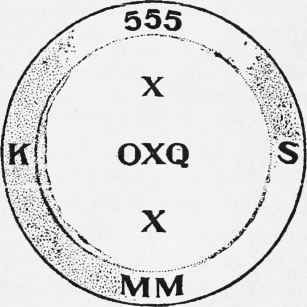
THE PERSIAN PLATE.
Continue to:


My Books

