


Nat. Order. Lauraceae. Cinnamomum Camphora, Nees Et Ebermaier. Sans
Description
This section is from the book "The Materia Medica Of The Hindus", by Udoy Chand Dutt. Also available from Amazon: The Materia Medica Of The Hindus.
Nat. Order. Lauraceae. Cinnamomum Camphora, Nees Et Ebermaier. Sans

Karpura,

Chandrdhba.
Vern. Kapur, Hind. Karpur. Beng.
Two varieties of camphor are mentioned by Sanskrit writers, namely, pakva and apakva, that is prepared with the aid of heat and without it. The latter is considered superior to the former. It would seem from the above description that by the term apakva karpura, was probably meant the camphor obtained in Borneo from the trunk of Dryobalanops aromatica, (Shorea Camphorifera, Roxb). and by the term pakva karpura, the China camphor obtained by sublimation from the wood of Cinnamomum Camphora.
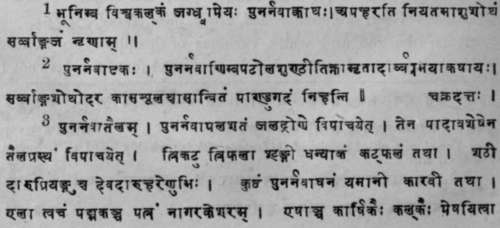
The Rajanirghantu describes an oil of camphor under the name of karpura taila. It is said to be useful in rheumatism and in giving firmness to loose teeth. This oil is not recognized or used by the native practitioners of the present day, but it most probably meant the camphor oil or liquid camphor obtained by making incisions on the Borneo camphor tree.
Camphor is regarded as carminative, stimulant and aphrodisiac; it is used in fever, diarrhoea, impotence, cough, eye-diseases, etc. It is also much used in the preparation of medicinal oils for imparting fragrance to them, singly as well as in combina-nation with other aromatic substances. Camphor enters into the composition of numerous medicines for the diseases mentioned above. The following is an illustration.
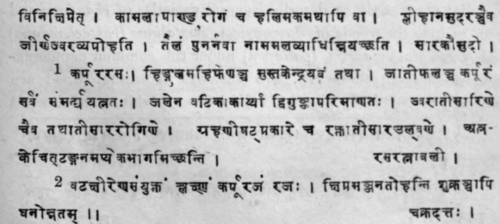
Karpura rasa,1 Take of cinnabar, opium, camphor, tubers of Cyperus rotundus (mustaka), indrajava seeds and nutmegs, equal parts; powder the ingredients, and make into four-grain pills with water. These pills are used in diarrhoea.
Camphor, rubbed with the milky juice of Ficus Bengalensis, is recommended to be applied to opacities on the cornea. It enters also into composition of several collyria.2 A small tent made with camphor is introduced into the urethra for the relief of irritability of the bladder and frequent micturition.1
Continue to:


My Books

