


Potassae Tartras. Lond. Tartrate of Potassa
Description
This section is from the book "The London Dispensatory", by Anthony Todd Thomson. Also available from Amazon: PDR: Physicians Desk Reference.
Potassae Tartras. Lond. Tartrate of Potassa
"Take of bitartrate of potassa, three pounds; carbonate of potassa, sixteen ounces, or as much as may be sufficient; boiling water, six pints. Dissolve the carbonate of potassa in the boiling water, and add the bitartrate of potassa, and boil. Filter the solution; and afterwards boil it down until a pellicle floats, and set it aside to crystallize. Having poured off the water from the crystals, dry them, and again evaporate that crystals may be produced."
Tartras Potassae, Edin. Tartrate of Potassa.
1 Pharmacologia
" Take of subcarbonate of potassa, one part: supertartrate of potassa, three parts, or a sufficient quantity; boiling water, fifteen parts. To the subcarbonate dissolved in the water add, in small portions, the supertartrate of potassa, reduced to a fine powder, as long as it excites effervescence, which gradually ceases before three times the weight of the subcarbonate of potassa be added; filter the solution when it is cold, and, after due evaporation, set it aside that crystals may form."
Potassae Tartras, Dub. Tartrate Of Potassa
"Take of common carbonate, five parts; bitartrate of potassa, fifteen parts; boiling water, forty-five parts. To the carbonate of potassa, dissolved in the water, gradually add the bitartrate rubbed to a subtile powder; filter the solution through paper, evaporate, and set it aside that crystals may form as it cools."
Syn. Kali Tartarizatum, P. L. 1787. Tartrate de Potasse (F.), Weinstein-saures Kali (G.), Tartrato di Potassa (I.).
In these processes the superabundant acid of the bitartrate of potassa is saturated by the potassa of the carbonate, the carbonic acid gas of which is expelled, and a neutral tartrate is obtained. The quantity of alkali required for this purpose must necessarily vary, owing to the degree of dryness of the carbonate employed. To obtain regular crystals, a very slow, nearly spontaneous evaporation is necessary; and, therefore, this salt, as found in the shops, and prepared on a large scale, is in the form of a white granular powder, which is produced by the evaporation being continued to dryness with frequent stirring.1
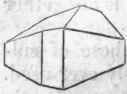
Qualities. - This salt has a bitterish, cool taste. The primary form of its crystal is a right oblique-angled prism, (see figure); and in this state it is soluble in its own weight of water at 60°: but in the granular form, four parts of cold water are required for its-solution. It is slightly deliquescent. When long kept in solution, its acid is decomposed, and its alkali remains in the state of a subcarbonate2: and the same circumstances occur when it is exposed to a red heat. Alcohol dissolves it readily. It is partially decomposed by the weaker acids and the acidulous salts; also by tamarinds, which convert it to the state of bitartrate; and it is completely decomposed by lime-water, chloride of barium, magnesia, nitrate of silver, and acetate and diacetate of lead. Its constituents, abstracting the water of crystallization, are, in 100 parts, 57.9
1 It was formerly named soluble tartar, sal vegitable, tartarus tartarisatusof acid, and 42.1 of alkali1; or 1 eq. of tartaric acid = 66.48 + 1 potassa = 47.15 = 113.63. As usually prepared, the crystals contain 1 eq. of the tartrate = 113.63 + 2 of water = 18 = 131.63.
2 Murray's Chymistry, 2d edit. iv. 329.
Medical properties and uses. - Tartrate of potassa is a valuable purgative, operating mildly, without griping; and even correcting the griping properties of senna and the resinous purgatives, with which it is, therefore, usually combined. It enters into Klein's Pulvis lenitivus hypochondriacus, which consists of the following articles : - Flavedinis Corticis Aurantiae, Radicis Rhei, Potassae Tartratis, āā 3 ss., Olei Cajeputi gutt. iij. M. ft. pulvis una pro dosi.2 The dose of the tartrate is from 3j. to
 j. in solution.
Continue to:


My Books

