


Gaultheria - Wintergreen. Partridge Berry - Tea Berry
Description
This section is from the book "Dental Medicine. A Manual Of Dental Materia Medica And Therapeutics", by Ferdinand J. S. Gorgas. Also available from Amazon: Dental Medicine.
Gaultheria - Wintergreen. Partridge Berry - Tea Berry
Source
Gaultheria is obtained from the leaves of the gaultheriae procumbens (Ericaceae), a small plant common to the woods of North America. The leaves contain a volatile oil, arbutin, urson, ericolin, tannic acid, etc., and the taste is aromatic, somewhat bitter, and astringent. The volatile oil consists principally of gautheriline and methyl salicylate, which yield a pure salicylic acid.
Oleum Gaultheriae
The oil of gaultheria is antiseptic and antipyretic, and is administered in doses of  x-xx in articular rheumatism, and locally is used as an antiseptic in wounds and cystitis. The spirit of gaultheria - spiritus gaultheriae - is used for flavoring. The infusion is used as a gelactagogue and em-menagogue, and is often added to liniments for rheumatic pains and swollen joints.
Dental Uses
The oil of gaultheria, one of the essential oils, is used in dental practice as an antiseptic, either alone or more generally in combination with other agents in the treatment of putrid root canals, alveolar abscesses, etc., and as an ingredient of local anaesthetic mixtures.
Dental Formulae
for Abscesses and Putrid Root Canals.
Dr. Black.
Carbolic acid (melted crystals) ........I part
Oil of cassia................2 parts
Oil of gaultheria..............3 parts. M.
This is the 1, 2, 3, mixture.

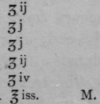
Local Anaesthetic. De Kay.
01. gaultheriae...............
Chloroformi................
Ether sulph...............
Chloral hydrat................
01. caryophylli...............
Alchoholis................
Signa
Apply with cotton pressed upon each side of the tooth.

Continue to:


My Books

