


Grains Of Paradise (Guinea Grains, Grana Paradisi)
Description
This section is from the book "A Text Book Of Materia Medica, Being An Account Of The More Important Crude Drugs Of Vegetable And Animal Origin", by Henry G. Greenish. Also available from Amazon: A Text Book of Materia Medica : Being an Account of the More Important Crude Drugs of Vegetable and Animal Origin.
Grains Of Paradise (Guinea Grains, Grana Paradisi)
Source, Etc
Grains of paradise are the seeds of Amomum Melegueta, Roscoe (N.O. Scitamineoe), a herb attaining about 1.5 metres in height, indigenous to the west coast of Africa. These seeds were much esteemed as a spice in the twelfth and thirteenth centuries; the country from which they were derived being unknown, they were called ' grains of paradise.' At that time they were imported from Tripoli, whither they had made the land journey from West Africa. Subsequently they were brought direct from the west coast of Africa to Portugal by Portuguese traders. They are now imported from West Africa.
The plant produces an ovoid pointed fruit about 10 cm. long, containing a large number of small seeds.
Description
Grains of paradise are small, hard, shining seeds of a rich reddish brown colour. They vary much in shape but are frequently sub-pyramidal with rounded or obtuse angles, and average about 3 mm. in length; the surface is seen under a lens to be minutely but distinctly papillose. Attached to one extremity of the seed are usually the paler fibrous remains of the funiculus, which project in the form of a beak. Cut transversely near the hilum, they exhibit a copious, white, starchy perisperm surrounding a yellowish, horny endosperm in which a minute paler embryo is embedded. The longitudinal section also exhibits the perisperm, endosperm, and embryo, the radicle of the latter being directed towards the funiculus. The crushed seeds have a faintly aromatic odour, but the taste is intensely pungent, rivalling that of capsicum fruit.
The student should observe
(a) The rich, reddish brown colour,
(b) The papillose surface,
(c) The large projecting funiculus,
(d) The pungent taste; and should compare them with cardamom seeds (see page 139).
Constituents
Grains of paradise contain a little (0.3 per cent.) volatile oil and a yellowish extremely pungent, oily body, paradol which has not yet been obtained in a crystalline form. It resembles gingerol (see p. 378), but its pungency is not destroyed by boiling with 2 per cent, solution of caustic potash.
Uses
The seeds possess stimulant properties, and were formerly employed as a condiment; now they are chiefly used in veterinary medicine.
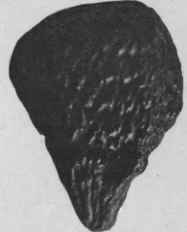
Fig. 99. - Grain of Paradise. (Magnified).
Continue to:


My Books

